








Discover Nipo Saldana, Zoe Saldana’s half-brother and talented Dominican actor-producer. Explore his biography, family connections, career journey, and contributions to Latin American entertainment.
Quick Facts About Nipo Saldana
| Attribute | Details |
|---|---|
| Full Name | Nipo Saldana |
| Relationship | Half-brother of Zoe Saldana |
| Nationality | Dominican |
| Profession | Actor, Producer |
| Ethnicity | Dominican-American |
| Known For | Acting in Latin American productions, family connection to Zoe Saldana |
| Family | Sister: Zoe Saldana (actress); Sisters: Cisely and Mariel Saldana |
| Heritage | Dominican roots |
Who Is Nipo Saldana? A Brief Introduction
Nipo Saldana may not be a household name like his famous half-sister Zoe Saldana, but he has carved out his own path in the entertainment industry. As a Dominican actor and producer, Nipo represents the lesser-known branch of the Saldana family tree, connected through their shared Dominican heritage and complex family dynamics.
While Zoe Saldana has become one of Hollywood’s highest-grossing actresses through her roles in Avatar, Guardians of the Galaxy, and Star Trek, Nipo has pursued his passion for storytelling within Latin American cinema and television. His journey reflects the diverse experiences of Dominican artists working to establish themselves in competitive entertainment markets.
Nipo Saldana Biography: Early Life and Background
Nipo Saldana’s early life is deeply rooted in Dominican culture. Born into a family with strong Caribbean connections, he shares a father with Zoe Saldana but was raised primarily in the Dominican Republic, which shaped his cultural identity and artistic sensibilities.
The Saldana family story is one of immigration, cultural preservation, and artistic ambition. While specific details about Nipo’s birthdate and early childhood remain relatively private, what’s clear is that his upbringing differed significantly from Zoe’s experience. After their father’s tragic death in a car accident when Zoe was young, the family dynamics became more complex, with different siblings experiencing different paths.
Growing up in the Dominican Republic exposed Nipo to the rich tapestry of Caribbean culture, Spanish-language storytelling traditions, and the vibrant arts scene that has produced numerous talented performers. This environment would later influence his approach to acting and production work.
His formative years were marked by an appreciation for both his Dominican heritage and the broader Latin American entertainment landscape. Unlike his half-sister, who moved to the United States at a young age and eventually trained at ballet schools before transitioning to acting, Nipo’s journey was more firmly anchored in Caribbean and Latin American contexts.
Nipo Saldana Zoe Saldana Brother: Understanding the Family Connection

The relationship between Nipo and Zoe Saldana is characterized by shared heritage but different life experiences. They are half-siblings, connected through their father, who was of Dominican descent. This familial bond links them to a proud cultural legacy, even as their careers have taken different trajectories.
Zoe Saldana has spoken publicly about her Dominican and Puerto Rican roots, often expressing pride in her Latina identity. She was born in New Jersey to a Dominican father and Puerto Rican mother, giving her a bicultural upbringing. After her father’s death, Zoe and her sisters Cisely and Mariel were raised by their mother, spending significant time in the Dominican Republic before eventually returning to the United States.
Nipo’s connection to this family narrative represents the extended branches of immigrant families, where siblings may grow up in different countries and cultural contexts while maintaining bonds of heritage and blood. The Saldana family exemplifies how Latin American families often span multiple nations, with each member contributing their unique perspective to the family story.
While Zoe has achieved international stardom, Nipo’s relationship with his famous half-sister appears to be one of mutual respect for their shared roots. Family connections in Dominican culture are typically strong and enduring, regardless of geographical distance or different career paths.
Nipo Saldana Dominican Actor: His Work in Entertainment
As a Dominican actor, Nipo Saldana has worked within the Spanish-language entertainment industry, which offers both opportunities and challenges distinct from Hollywood. The Latin American film and television market has grown substantially in recent decades, with streaming platforms creating new demand for diverse Spanish-language content.
Dominican cinema and television have historically operated on smaller budgets compared to Hollywood productions, requiring actors and creators to be resourceful and passionate about their craft. Nipo’s work as an actor likely encompasses television dramas, independent films, and possibly theater productions that celebrate Caribbean stories and perspectives.
The Dominican Republic has produced numerous talented performers who have found success both locally and internationally. Artists from the island often bring a particular energy and authenticity to their roles, drawing from the country’s rich musical traditions, expressive communication style, and complex history.
Nipo’s acting career reflects a commitment to representing Dominican stories and contributing to the cultural production of his homeland. While he may not have the same level of international recognition as his half-sister, his work serves the important function of enriching Latin American media and providing representation for Dominican audiences.
The challenges facing Dominican actors include limited funding for productions, competition from larger Spanish-language markets like Mexico and Argentina, and the constant temptation to migrate to Hollywood for greater opportunities. Nipo’s choice to remain focused on Dominican and Latin American projects demonstrates dedication to his cultural roots.
Nipo Saldana Producer: Behind-the-Scenes Contributions
Beyond acting, Nipo Saldana has also worked as a producer, taking on the creative and logistical challenges of bringing stories to screen. Producing in the Latin American context requires entrepreneurial spirit, strong networking skills, and often a willingness to work with limited resources while maintaining artistic integrity.
Producers in emerging markets like the Dominican Republic wear many hats. They must secure financing, coordinate with directors and cast members, manage production schedules, and navigate distribution challenges. The role requires both creative vision and practical business acumen.
Nipo’s work as a producer positions him as someone invested in the broader ecosystem of Dominican entertainment. Producers help shape which stories get told and how resources are allocated within the industry. By taking on this role, he contributes to creating opportunities for other Dominican artists and ensuring that Caribbean perspectives are represented in media.
The Latin American production landscape has been transformed by streaming platforms like Netflix, Amazon Prime, and regional services that have increased demand for Spanish-language content. This shift has created new opportunities for producers who can deliver compelling stories that resonate with both local and international audiences.
Nipo’s dual role as actor and producer suggests a comprehensive understanding of the entertainment business and a desire to have creative control over projects. Many successful industry professionals eventually transition into producing to have greater influence over storytelling and project development.
Nipo Saldana Family: The Broader Saldana Legacy
The Saldana family represents the intersection of Caribbean culture, immigrant experiences, and artistic achievement. With roots in both the Dominican Republic and Puerto Rico, the family embodies the rich cultural diversity of Latin America.
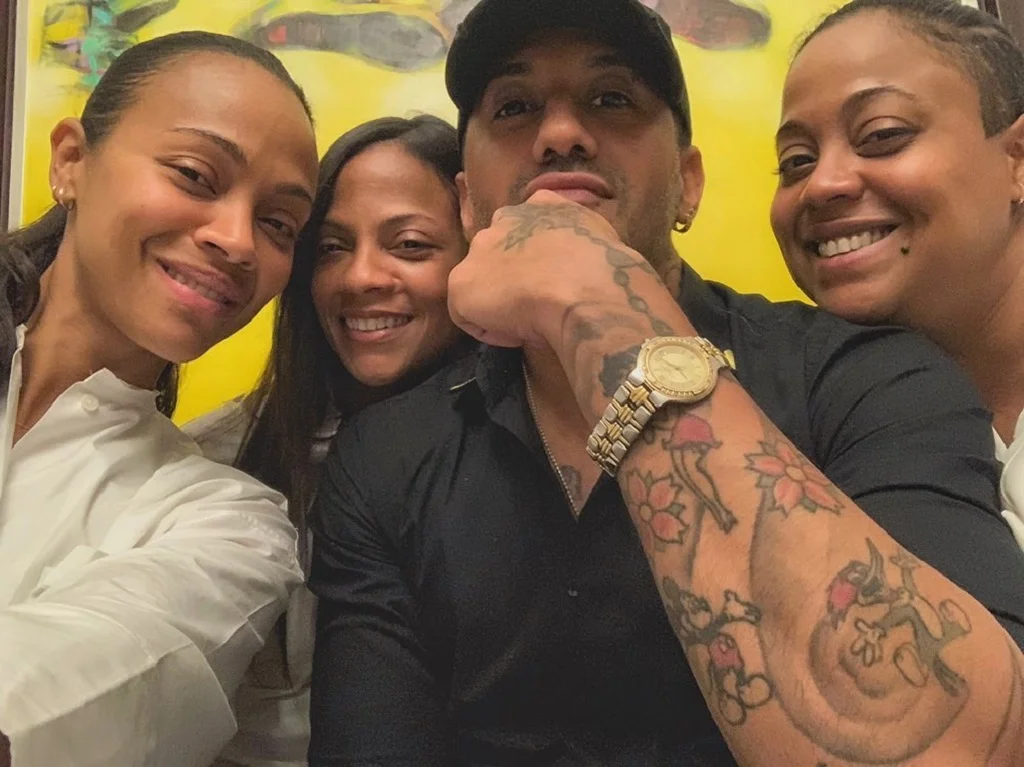
Zoe Saldana has three sisters total: Cisely, Mariel, and her half-brother Nipo. Each family member has navigated their own relationship with their cultural heritage and chosen different ways to express their creativity and ambition.
Family has remained important to Zoe throughout her career. She has frequently discussed how her mother’s strength and her sisters’ support helped her succeed in Hollywood. She has also emphasized the importance of maintaining her Spanish language skills and ensuring her own children understand their Latino heritage.
For Nipo, being part of the Saldana family means carrying forward Dominican cultural traditions while also acknowledging the achievements of his internationally famous half-sister. Extended families in Latin American cultures often maintain close ties despite physical distance, with family gatherings, shared celebrations, and mutual support remaining priorities.
The Saldana family story also reflects the complexity of blended families and the resilience required to maintain connections across borders and life circumstances. Their shared Dominican heritage provides a foundation for family identity even as individual members pursue different paths.
Nipo Saldana Career: Challenges and Achievements
Building a career in the Latin American entertainment industry requires persistence, talent, and adaptability. Nipo Saldana’s career trajectory demonstrates the dedication necessary to succeed outside the Hollywood spotlight.
The Dominican entertainment industry offers opportunities but also significant challenges. Productions typically operate with smaller budgets, limiting the scope and technical sophistication of projects. Distribution can be difficult, with limited theatrical release options and dependence on television networks or emerging streaming platforms.
Despite these challenges, Dominican artists have achieved remarkable success. Musicians like Juan Luis Guerra have achieved international recognition, while actors and filmmakers continue to produce work that celebrates Caribbean culture and perspectives.
Nipo’s career represents a choice to prioritize cultural authenticity over mainstream recognition. While his half-sister navigated Hollywood’s demands and eventually became a global superstar, Nipo has remained closer to his roots, contributing to the cultural life of the Dominican Republic and broader Spanish-language markets.
Success in this context is measured differently than Hollywood stardom. It includes building a sustainable career, earning respect from peers, contributing to cultural production, and maintaining artistic integrity while navigating commercial pressures.
The future of Latin American entertainment looks increasingly promising as streaming platforms invest in diverse content and audiences worldwide demonstrate appetite for stories from different cultural perspectives. This evolving landscape may create new opportunities for established professionals like Nipo to reach wider audiences while maintaining their authentic voice.
More Read
The Impact of Heritage on Creative Identity
For both Nipo and Zoe Saldana, Dominican heritage has been foundational to their identities as artists. The Caribbean influence brings particular rhythms, storytelling traditions, and cultural perspectives that enrich their work.
Dominican culture is characterized by warmth, expressiveness, musical richness, and resilience born from a complex history. These qualities often translate into performance styles that are emotionally authentic and deeply engaging.
Nipo’s commitment to working within Dominican and Latin American contexts reflects a desire to tell stories that matter to his community and represent perspectives often underrepresented in global media. This work has inherent value beyond commercial metrics, contributing to cultural preservation and community pride.
Conclusion
Nipo Saldana may walk a different path than his famous half-sister Zoe Saldana, but his contributions to Dominican entertainment deserve recognition. As both an actor and producer, he represents the many talented professionals working to strengthen Latin American media and tell authentic Caribbean stories. His career reflects the choices artists make between chasing international stardom and remaining rooted in their cultural communities—both paths requiring courage, talent, and dedication.