



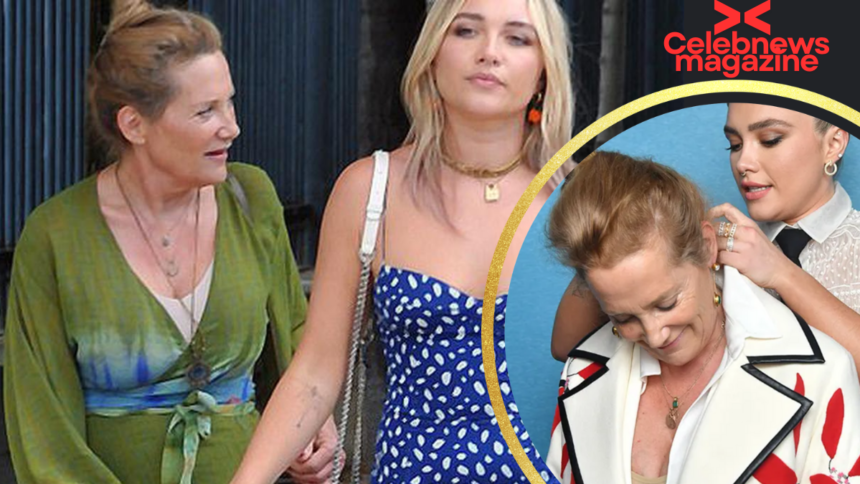
Discover the inspiring story of Deborah Mackin, Florence Pugh’s mother. Learn about her dance career, family life with Clinton Pugh, and her influence on her talented children including Toby Sebastian, Arabella Gibbins, and Rafaela Pugh.
Quick Facts About Deborah Mackin
| Attribute | Details |
|---|---|
| Full Name | Deborah Mackin |
| Born | Approximately 1962-1964, England, United Kingdom |
| Age | Approximately 60-62 years (as of 2026) |
| Nationality | British |
| Ethnicity | Caucasian |
| Profession | Former Ballet Dancer, Aerobics Instructor, Dance Teacher |
| Education | Laban Centre, London; Tring Park School for the Performing Arts |
| Spouse | Clinton Pugh (married early 1990s) |
| Previous Marriage | Peter Fredericks Gibbins (married 1983, divorced after 1986) |
| Children | Arabella Gibbins, Toby Sebastian, Florence Pugh, Rafaela Pugh |
| Famous For | Mother of actress Florence Pugh; Former professional dancer |
| Residence | Oxfordshire, England |
Deborah Mackin: The Woman Behind Hollywood’s Rising Star
While Florence Pugh commands attention on red carpets and movie screens worldwide, the woman who shaped her into the disciplined, passionate performer she has become often stands quietly in the background. Deborah Mackin represents a different kind of success story—one rooted in artistic dedication, thoughtful parenting, and an unwavering commitment to nurturing creativity in others.
Born in England during the early 1960s, Mackin carved out her own path in the performing arts long before her daughter’s name became synonymous with Hollywood excellence. Her journey from aspiring dancer to respected instructor, and ultimately to the mother of four talented children, offers a compelling narrative about the lasting impact of artistic values and supportive parenting.
Deborah Mackin Biography: Early Life and Dance Training
Deborah Mackin‘s story begins in England, where she was drawn to the world of movement and performance from an early age. Details about her family background and childhood remain largely private, reflecting a deliberate choice to maintain personal boundaries even as her daughter’s fame has grown.
What is known is that Mackin pursued her passion for dance with serious intent. She trained at the prestigious Laban Centre in London, one of Europe’s most respected institutions for contemporary dance education. The Laban Centre, known for its rigorous approach to movement studies and choreography, provided Mackin with a foundation in both the technical and expressive dimensions of dance.
She also attended Tring Park School for the Performing Arts in Hertfordshire, further honing her skills in ballet and contemporary dance. These formative years instilled in her not just technical proficiency, but also the discipline, dedication, and professional standards that would later define her approach to parenting and teaching.
During her performing years, Mackin worked professionally as a dancer, experiencing firsthand the demands and rewards of life in the performing arts. Though she never achieved widespread public recognition, her career provided valuable insights into the commitment required for artistic success—lessons she would later pass on to her children.
Deborah Mackin Age and Personal Background
Born around 1962 to 1964, Deborah Mackin is currently in her early sixties. Her exact birth date remains undisclosed, consistent with her preference for maintaining privacy despite her family’s public profile.
As a British citizen of white ethnicity, Mackin represents a generation of women who balanced professional ambitions with family commitments, often making significant personal sacrifices to support their children’s dreams. Her life reflects the experiences of many mothers who channel their own artistic aspirations into nurturing the next generation’s talents.
Throughout her life, Mackin has embodied a free-spirited yet grounded approach to both art and parenting. Former colleagues and friends describe her as energetic, creative, and supportive—qualities that have clearly influenced her children’s personalities and career choices.
Deborah Mackin Clinton Pugh Wife: A Creative Partnership
The love story between Deborah Mackin and Clinton Pugh began in an unexpected setting—an aerobics class. At the time, Mackin was working as an aerobics instructor, having transitioned from performance dance into teaching fitness and movement. Clinton Pugh, who would later become a successful restaurateur and designer, attended one of her classes, and their connection was immediate.

Their meeting in the early aerobics era of the 1980s represented a convergence of two creative spirits. Both valued artistic expression, physical vitality, and the importance of creating spaces—whether through movement or design—where people could thrive.
The couple married in the early 1990s, establishing their home in Oxfordshire, England. Their marriage has endured for over three decades, built on mutual respect, shared creative values, and a joint commitment to raising their children in an environment that encouraged artistic exploration.
Clinton Pugh, known for his iconic Oxford restaurants including Café Coco, Kazbar, Café Tarifa, The Lemon Tree, and Grand Café, brought his design sensibility and entrepreneurial spirit to the partnership. Deborah contributed her artistic background and her gift for teaching discipline alongside creativity. Together, they created a household atmosphere where performance, music, and self-expression were not just accepted but celebrated.
Before her marriage to Clinton, Deborah was previously married to Peter Fredericks Gibbins in 1983. From that first marriage, she had her eldest daughter, Arabella Gibbins, born in 1986. Following her divorce, Arabella became Clinton’s stepdaughter when Deborah remarried, and she was fully embraced into the Pugh family.
Deborah Mackin Family: Creating an Artistic Household
The Pugh-Mackin household in Oxfordshire became a nurturing ground for creative talent. Deborah and Clinton raised four children, each of whom inherited their parents’ artistic inclinations and developed careers in the entertainment industry.
Family life for the Pughs was far from conventional. Music lessons, performance practice, and artistic discussions were woven into daily life. Deborah’s background in dance and Clinton’s work in restaurant design meant the children grew up understanding the value of aesthetics, discipline, and presentation.
Despite their comfortable upper-middle-class lifestyle, the family faced challenges. When Florence was young, she suffered from tracheomalacia, a respiratory condition that made breathing difficult, especially in cold weather. The family made the significant decision to temporarily relocate to Andalusia, Spain, seeking a warmer climate that would help Florence’s health.
This move demonstrated Deborah’s willingness to prioritize her children’s well-being over stability or career considerations. The years in Spain provided not only better health for Florence but also exposed the entire family to different cultures, landscapes, and ways of living—experiences that would broaden the children’s perspectives as they pursued their artistic careers.
After several years, the family returned to England, settling back into their Oxfordshire home. The children continued their education and artistic development in an environment that balanced support with expectations of professionalism and commitment.
Deborah Mackin Children: Four Paths in the Performing Arts
Deborah Mackin’s greatest legacy may well be her four children, each of whom has pursued creative careers with varying degrees of public success.
Arabella Gibbins: The Eldest Performer
Born November 20, 1985, Arabella Gibbins is Deborah’s eldest child from her first marriage. Now 40 years old, Arabella followed her mother into the performing arts, though she chose theater and voice work over dance.
Arabella earned a bachelor’s degree in English Literature from the University of Bristol and later studied theater at Oxford College of Drama. She continued her education with a Master of Fine Arts from The Royal Central School of Speech and Drama, demonstrating a commitment to formal training that echoes her mother’s approach.
As an actress, singer, and voice coach, Arabella has primarily worked in theater, with occasional film appearances. While she hasn’t achieved the same level of fame as her younger sister Florence, she has carved out a respected career in the performing arts, particularly in stage productions.
Toby Sebastian: Actor and Musician
Born in 1992, Toby Sebastian is Deborah and Clinton’s eldest son and second child overall. Now 34 years old, Toby achieved recognition for his role as Trystane Martell in the HBO series “Game of Thrones,” one of television’s most watched programs.
Beyond acting, Toby is also an accomplished musician, reflecting the diverse artistic influences in his upbringing. His career demonstrates the family’s emphasis on pursuing multiple creative outlets rather than limiting oneself to a single discipline.
Florence Pugh: The Hollywood Star
Born January 3, 1996, Florence Pugh is undoubtedly the most publicly successful of Deborah’s children. At 30 years old, she has established herself as one of her generation’s most compelling actresses.
Florence’s breakthrough came with “Lady Macbeth” (2016), followed by acclaimed performances in “Fighting with My Family” (2019), “Midsommar” (2019), “Little Women” (2019), for which she received an Academy Award nomination, and her role as Yelena Belova in Marvel’s “Black Widow” (2021).
Her success has brought increased attention to her family, yet Florence consistently credits her mother’s influence. In interviews, she has spoken about Deborah’s early lesson about professionalism—a childhood moment when her mother calmly but firmly explained that committing to a performance means knowing your lines and respecting others’ time.
This lesson, delivered without harshness but with clarity, has become a defining principle in Florence’s career. Directors and co-stars frequently praise her preparation, focus, and professionalism—qualities directly traceable to her mother’s teaching.
Rafaela “Raffie” Pugh: The Youngest Sister
Born in 2004, Rafaela Pugh is the youngest of Deborah’s children, now 22 years old. Florence has spoken movingly about her close bond with Raffie, describing how she would wake early on weekend mornings to care for her baby sister, making bottles and watching “Friends” together.
Raffie has appeared in at least one film, “Born of War” (2014), though her current career path remains less publicly defined than her older siblings. Growing up in a household where her sister became a major Hollywood star, Raffie has maintained a relatively private life.
The relationship between Florence and Rafaela illustrates the close family bonds that Deborah cultivated. Rather than competition or jealousy, the siblings demonstrate genuine affection and support for one another—a testament to their mother’s approach to family dynamics.
Deborah Mackin Toby Sebastian: Nurturing Multiple Talents
Deborah’s relationship with her son Toby showcases her ability to nurture different types of creative expression. While all her children pursued performing arts careers, each found their own niche, suggesting that Deborah encouraged individuality rather than pushing her children toward a single path.
Toby’s success in “Game of Thrones” brought him international recognition, yet he has also pursued music, releasing original material and performing live. This versatility reflects his mother’s own background, which spanned performance, teaching, and fitness instruction.
Deborah’s influence on Toby, as with all her children, centered on teaching the value of discipline and preparation. The lesson she imparted to young Florence about learning lines and respecting commitments applied equally to Toby’s work. Whether preparing for a television role or a musical performance, the expectation of professionalism remained constant.
Deborah Mackin Arabella Gibbins: A Blended Family Success
The relationship between Deborah Mackin and her eldest daughter Arabella Gibbins illustrates the successful blending of families. After Deborah’s divorce from Peter Fredericks Gibbins, she brought Arabella into her new marriage with Clinton Pugh, where the child was fully embraced as part of the family.
Arabella’s pursuit of theater and voice work demonstrates the same artistic values that Deborah instilled in all her children. Despite being from Deborah’s first marriage, Arabella was raised alongside her half-siblings without apparent division or favoritism, suggesting Deborah’s skill in creating family unity.
The fact that Arabella continued her education through multiple degrees, including a master’s program at The Royal Central School of Speech and Drama, reflects the family’s emphasis on serious artistic training—a value directly attributable to Deborah’s own experience with formal dance education.
Deborah Mackin Rafaela Pugh: The Bond Between Sisters
The relationship between Deborah Mackin and her youngest daughter Rafaela offers insight into Deborah’s parenting across two decades. By the time Raffie was born in 2004, Deborah had already raised three children and had refined her approach to balancing support with independence.
Florence has described her relationship with Raffie in terms that reveal Deborah’s parenting style. Rather than preventing Florence from helping with her baby sister, Deborah allowed her older daughter to take on significant caregiving responsibilities. This approach fostered maturity and sibling bonding while also teaching Florence about responsibility and nurturing.
The close relationship between Florence and Rafaela suggests that Deborah created an environment where siblings genuinely cared for one another rather than competing for attention or resources. This dynamic reflects a deliberate parenting philosophy focused on family cohesion and mutual support.
The Mackin Teaching Philosophy: Discipline Meets Encouragement
Deborah Mackin’s most significant contribution to her children’s success may be her distinctive approach to teaching and parenting. Drawing from her background as a professional dancer and instructor, she understood that artistic success requires both natural talent and rigorous discipline.
The story Florence often recounts—about being seven years old and admitting she hadn’t learned her lines for a play—perfectly captures Deborah’s philosophy. Rather than responding with anger or dismissal, Deborah delivered a calm but clear message about professionalism and respect for others.
This approach removed the emotional drama that often accompanies parental discipline while establishing non-negotiable standards. Deborah taught her children that performance is not just about personal expression; it’s about commitment, preparation, and respect for collaborators and audiences.
This lesson has proven invaluable in Florence’s career. In an industry where many young performers struggle with professional expectations, Florence has distinguished herself through consistent preparation and reliability. Directors and co-stars have noted her focus and work ethic—qualities instilled by her mother’s early teaching.
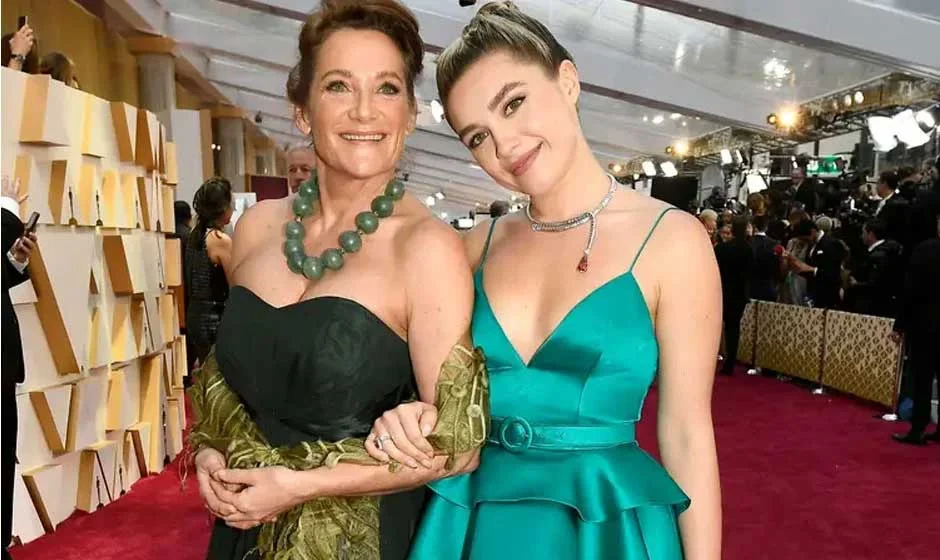
Deborah’s teaching extended beyond professional lessons. She also modeled a balanced approach to life, combining serious artistic dedication with spontaneity and joy. The famous story of Deborah at the 2020 Oscars after-party, where she reportedly spent time with Snoop Dogg and went missing for a while before reappearing in high spirits, illustrates her free-spirited side.
Florence has described her parents as “partiers” who know how to enjoy life while still maintaining their responsibilities. This balance—between discipline and spontaneity, between work and play—represents another crucial lesson Deborah imparted to her children.
Life Beyond Motherhood: Deborah’s Continued Influence
While much attention focuses on Deborah Mackin’s role as Florence Pugh’s mother, her life encompasses more than maternal identity. She has maintained her own interests, friendships, and activities, modeling for her children the importance of personal identity beyond family roles.
Deborah continues to live in Oxfordshire with Clinton, though her daily activities remain largely private. She occasionally appears at red carpet events with Florence, including the Oscars, film premieres, and award shows. These appearances reveal a woman comfortable in the spotlight yet not seeking it—present to support her daughter but not attempting to share the fame.
Her relationship with her husband Clinton has endured despite the challenges of raising four ambitious children and weathering the demands of Clinton’s restaurant empire. The couple’s marriage represents a partnership between two creative, energetic people who have supported each other’s endeavors while jointly raising their family.
Friends and family members describe Deborah as warm, energetic, and genuinely interested in others. Her background as a dance teacher means she continues to appreciate movement and physical expression, though whether she still teaches remains unclear.
The Creative Legacy: Influence Across Generations
Deborah Mackin’s true legacy extends beyond her individual children’s successes. She has created a template for artistic parenting that balances support with standards, encouragement with accountability, and creative freedom with professional responsibility.
Each of her children pursued performing arts careers, yet each found their own path. Arabella focused on theater and voice work; Toby combined acting with music; Florence became a film star; and Rafaela is still defining her journey. This diversity suggests Deborah encouraged her children to follow their individual interests rather than prescribing a single path to success.
The family’s close relationships, evident in their public interactions and in the siblings’ genuine affection for one another, reflect values Deborah cultivated. Rather than the competitive dynamics that can develop in artistic families, the Pugh siblings demonstrate mutual support and genuine pride in each other’s accomplishments.
Deborah’s influence is also visible in Florence’s public statements about professionalism, work ethic, and respect for the craft of acting. In interviews, Florence consistently returns to the lessons her mother taught her—about preparation, commitment, and treating performance as serious work deserving of one’s best effort.
The fact that Florence often brings her mother to major industry events, introducing her to colleagues and celebrating with her at parties, demonstrates the continued closeness of their relationship. Despite Florence’s fame and busy career, she maintains strong family connections—a tribute to the bonds Deborah fostered.
Public Moments: The Oscar Night Story
One of the most famous anecdotes about Deborah Mackin involves the 2020 Academy Awards, when Florence was nominated for Best Supporting Actress for “Little Women.” Florence brought both her parents to the ceremony and subsequent after-parties, and the evening provided a glimpse into the family’s dynamic.
Florence later described her parents’ excitement at the event, saying they were like “toddlers” making bets on how many celebrities they could meet. The comparison reveals the playful relationship Florence has with her parents, who despite their own accomplishments were genuinely thrilled by the Hollywood experience.
The evening took a memorable turn when Deborah went missing during Madonna’s after-party. She eventually reappeared, and Florence joked that her mother had been with Snoop Dogg, suggesting his influence had contributed to Deborah’s elevated spirits. While the details remain somewhat mysterious, the story captures Deborah’s free-spirited nature and willingness to fully embrace experiences.
This anecdote, widely shared in media coverage of Florence’s Oscar night, humanized both Florence and her mother. It showed audiences that behind the polished red carpet appearances and professional achievements lies a family that knows how to have fun together, that doesn’t take itself too seriously, and that celebrates life’s extraordinary moments with genuine enthusiasm.
More Read

Balancing Privacy and Public Interest
Deborah Mackin has managed something relatively rare in the age of social media and celebrity culture: maintaining substantial privacy despite having a famous daughter. While some celebrity parents leverage their children’s fame for their own visibility, Deborah has consistently chosen a different path.
She does not maintain a public social media presence, does not give interviews, and does not court publicity. When she appears at events with Florence, she does so as a supportive mother rather than as someone seeking attention. This discretion reflects both personal preference and a protective instinct about maintaining family boundaries.
The limited information available about Deborah’s personal life, early years, and current activities appears to be intentional. By controlling what information enters the public domain, she has preserved spaces of genuine privacy for herself and her family.
This approach may also reflect lessons from her own experience in the performing arts. Having worked as a professional dancer and instructor, Deborah understood the difference between public performance and private life. She has modeled for her children the importance of maintaining that boundary, even as their careers place them in the public eye.
Florence has respected her mother’s preference for privacy, sharing anecdotes and expressing gratitude in interviews but not revealing intimate details or exposing her mother to unwanted scrutiny. This mutual respect characterizes their relationship and demonstrates the healthy boundaries Deborah established.
Conclusion: A Quiet Force Behind Extraordinary Success
Deborah Mackin’s story is not one of conventional celebrity or public achievement. She never became a famous dancer, never built a personal brand, and never sought the spotlight for herself. Yet her influence radiates through the accomplishments of her four children, particularly through Florence Pugh’s remarkable career.
She represents a kind of success that our culture often overlooks—the success of thoughtful parenting, consistent values, and supportive presence. Her contribution to the performing arts comes not through her own performances but through her role in shaping the next generation of performers.
The lessons Deborah taught her children—about professionalism, preparation, respect, and commitment—have practical value that extends far beyond the entertainment industry. They represent fundamental principles about how to approach any serious endeavor with integrity and discipline.
At the same time, Deborah’s free-spirited nature, her ability to enjoy life, and her willingness to embrace extraordinary experiences with enthusiasm have shown her children that discipline and joy need not be mutually exclusive. One can be serious about one’s work while still maintaining the capacity for spontaneity and delight.
As Florence’s career continues to flourish, and as her other children pursue their own paths, Deborah Mackin remains a steady presence—not managing their careers or seeking reflected glory, but simply being present, supportive, and proud. This quiet strength, this ability to nurture without controlling and to support without overshadowing, may be her greatest gift to her children.
In an era obsessed with personal branding and public visibility, Deborah Mackin offers a different model: one of influence through presence rather than publicity, of teaching through example rather than instruction, and of success measured not by fame but by the flourishing of those you love. Her story reminds us that the most profound impacts often come not from those who seek the spotlight, but from those who help others shine within it.