



Discover the life of Habiba Abdul-Jabbar, formerly Janice Brown, ex-wife of NBA legend Kareem Abdul-Jabbar. Learn about her marriage, children, Islamic conversion, and family legacy in this comprehensive biography.
Quick Facts About Habiba Abdul-Jabbar
| Category | Details |
|---|---|
| Birth Name | Janice Brown |
| Muslim Name | Habiba Abdul-Jabbar |
| Birth Year | October 1950 |
| Birthplace | New York, United States |
| Original Religion | Christian (Catholic) |
| Current Religion | Islam |
| Marriage Date | May 28, 1971 |
| Divorce Date | 1978 (finalized 1983) |
| Children | Three – Habiba (1972), Kareem Jr. (1976), Sultana (1979) |
| Ex-Husband | Kareem Abdul-Jabbar (NBA Legend) |
| Profession | Fashion Designer |
| Clothing Brand | Tutu Glam |
| Remarriage | 1986 |
| Education | Oberlin College (Creative Writing, 1997) |
Habiba Abdul-Jabbar: Early Life and Background
Born as Janice Brown in October 1950 in New York, Habiba Abdul-Jabbar grew up in a traditional Christian household with strong Catholic roots. Her parents raised her with firm religious values, never imagining their daughter would one day convert to Islam and become part of basketball royalty.
Little is known about Habiba’s early educational background or childhood details, as she has maintained a remarkably private life throughout the years. Unlike many who seek the spotlight after connecting with famous personalities, Habiba has consistently chosen discretion over publicity.
Before meeting the basketball legend, Janice Brown lived an ordinary life away from media attention. Her transformation from a Christian schoolteacher to Habiba Abdul-Jabbar, the wife of one of the NBA’s greatest players, would mark a significant turning point in her personal and spiritual journey.
Meeting Kareem Abdul-Jabbar: A Love Story Begins
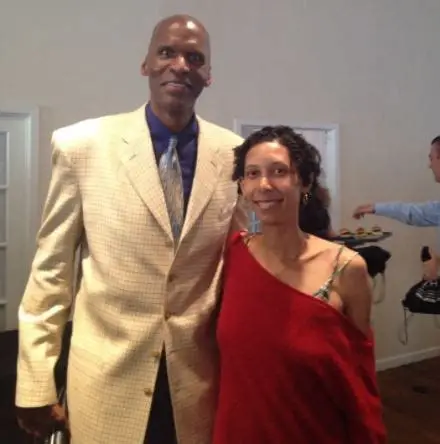
The meeting between Habiba and Kareem Abdul-Jabbar happened during her high school years at a Los Angeles Lakers game. At the time, Kareem was playing for UCLA under his birth name, Lew Alcindor, during his senior year. Interestingly, Habiba was dating Kareem’s acquaintance, Cliff Anderson, a basketball player who inadvertently introduced the future couple.
Following her breakup with Cliff Anderson, Kareem extended an invitation to Habiba to watch him play at UCLA. This marked the beginning of their romantic relationship. As Kareem himself revealed in an interview, “I invited her to come see UCLA play and she said okay. I started calling her and we began going out.”
Their relationship developed during a transformative period in Kareem’s life. In the summer of 1968, Kareem had converted to Sunni Islam from Catholicism, adopting the Arabic name Kareem Abdul-Jabbar, though he wouldn’t use it publicly until 1971. This religious conversion would eventually influence Habiba’s own spiritual journey.
Habiba Abdul-Jabbar Islam: Religious Conversion
One of the most significant aspects of Habiba’s life story is her conversion to Islam. Raised as a devout Christian in a Catholic family, Habiba made the life-changing decision to embrace Islam because of her relationship with Kareem Abdul-Jabbar.
Upon her conversion, she received the Muslim name “Habiba,” which means “beloved” in Arabic. This name was chosen by Hamaas Abdul-Khaalis, the leader of the Hanafi Muslim movement and Kareem’s spiritual mentor. The conversion represented not just a change of faith, but a complete transformation of identity and lifestyle.
This decision came with significant personal sacrifices. Converting to Islam meant potentially straining relationships with her Christian parents and adopting entirely new religious practices, including traditional Muslim dress, prayer rituals, and customs. Despite these challenges, Habiba committed fully to her new faith, demonstrating the depth of her dedication to both her beliefs and her relationship with Kareem.
Habiba Abdul-Jabbar Marriage: A Controversial Wedding
Habiba Abdul-Jabbar and Kareem Abdul-Jabbar exchanged wedding vows on May 28, 1971, in Washington, D.C. The ceremony was conducted according to Islamic customs and took place at a mosque, led by Hamaas Abdul-Khaalis.
However, the wedding day was marked by significant controversy and heartbreak. According to Islamic rules enforced at the mosque, Habiba’s parents were not permitted to witness their daughter’s wedding ceremony because of their Catholic faith. They had traveled from New York to Washington, D.C., specifically to attend the ceremony, only to be denied entry.
Kareem himself was reportedly unaware of this restriction until after the ceremony had begun. As a new Muslim convert, he hadn’t anticipated his in-laws being excluded from such an important family moment. This incident created a serious rift between Kareem and Habiba’s parents early in the marriage.
The situation weighed heavily on Kareem, who spent years attempting to repair the damage. He made it a point to regularly acknowledge “Moms and Pops in New York” whenever he appeared on national television, a gesture of reconciliation that continued throughout his career.
Adding to the unconventional nature of their wedding, Kareem left immediately after the ceremony, and Habiba did not spend her wedding night with her new husband. This set a troubling precedent for what would become a complicated and challenging marriage.
Habiba Abdul-Jabbar Kareem Abdul-Jabbar Wife: Marriage Challenges
The union between Habiba and Kareem Abdul-Jabbar faced numerous challenges from the very beginning. While Kareem described their first year of marriage as pleasant—with Habiba learning to cook his favorite meals, practicing Islamic prayer, maintaining their home, and welcoming their first child—the relationship soon deteriorated.
Kareem himself admitted in his autobiography that he demanded a lot from Habiba while offering her minimal support. As someone raised as an only child, he struggled to adjust his life to accommodate a spouse and children. The pressures of his intensifying basketball career, combined with his deep commitment to his Islamic faith, often left little time for family life.
By December 1973, just two years after their wedding, Habiba and Kareem were no longer living together. They formally separated, with Habiba taking their daughter and moving to Washington, D.C. Despite the separation, Kareem would occasionally visit, and during one of these visits, Habiba became pregnant with their second child, Kareem Jr.
The couple’s estrangement was further complicated by external factors. Kareem suffered from severe migraines related to trauma within the Muslim community. In January 1973, his mentor’s wife and children were killed in a rival attack, and Kareem himself became a target. These events added immense stress to an already strained marriage.
The Role of Cheryl Pistono in the Divorce
While Habiba and Kareem were separated, the basketball star began a relationship with Cheryl Pistono in 1977. According to reports, Pistono had Kareem’s ear more than any of his teachers, friends, or family members. She reportedly advised him to officially divorce Habiba, and the split was formalized in 1978.
Notably, Kareem announced his intention to divorce Habiba when she was three months pregnant with their third child, Sultana. This timing reveals the complexity and difficulty of their final years together. Despite the divorce being finalized in 1978, the legal process wasn’t completed until 1983.
The influence of Cheryl Pistono on Kareem’s decision to divorce has been a subject of discussion, though the exact extent of her role remains unclear. What is certain is that Kareem and Habiba’s relationship had fundamentally broken down years before the official divorce.
Habiba Abdul-Jabbar Children: Three Remarkable Individuals
Despite the tumultuous nature of their marriage, Habiba and Kareem Abdul-Jabbar welcomed three children who have each carved their own paths in life.
Habiba Alcindor (Born May 15, 1972)
The eldest child and first daughter was named after her mother. Born in the District of Columbia, Habiba Jr. grew up experiencing the challenges of being the daughter of an NBA superstar while her parents’ marriage crumbled around her.
Like all children in the insular Hanafi Muslim community, Habiba Jr. was homeschooled and practiced Islam, including wearing traditional Muslim attire. Her childhood was significantly impacted when her father announced his desire for divorce in 1978, when she was just six years old.
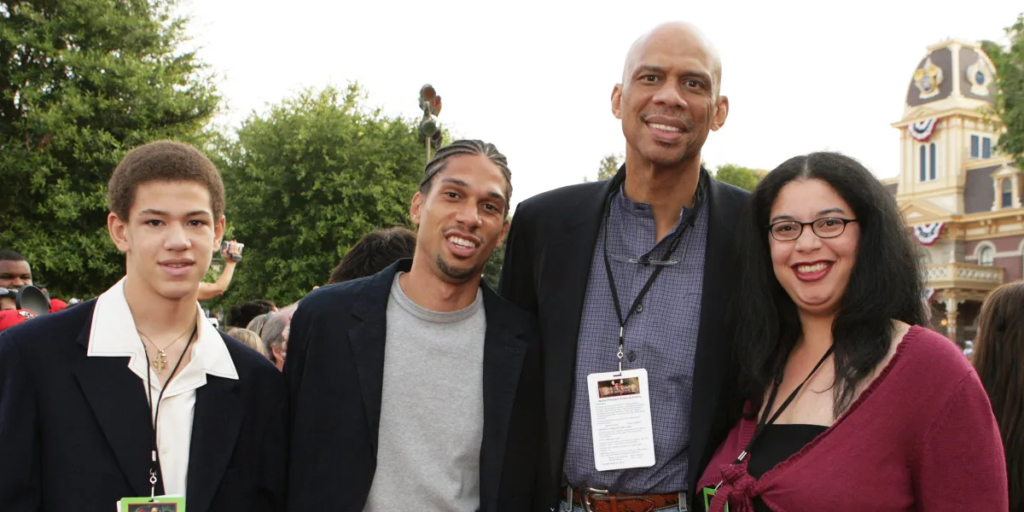
Habiba Jr. legally changed her last name from Abdul-Jabbar to Alcindor—her paternal grandparents’ surname—before attending college. She explained this decision was because she considered herself agnostic and wanted a connection to her family history rather than her father’s adopted religious identity.
She graduated high school in 1989, the same year her father retired from basketball, receiving a writing award from her English teachers. She went on to attend the University of California, Los Angeles, and later Oberlin College, where she earned a degree in Creative Writing in 1997.
Today, Habiba Alcindor has established herself as a dramatist, journalist, social activist, filmmaker, and medical social worker. She has worked as a Development Associate at The Floating Hospital since 2019 and has contributed to various publications. She developed a television series concept called “Gold Rush,” focusing on the “Showtime Lakers” and her experiences as the daughter of a sporting icon.
In interviews, Habiba Jr. has revealed that her father “was never there” during her childhood due to his basketball career. She prefers to downplay her father’s fame, often letting people know her for a long time before revealing her family connection.
Kareem Abdul-Jabbar Jr. (Born August 23, 1976)
The only son from Habiba and Kareem’s marriage, Kareem Jr. was born during their separation. Following in his father’s footsteps, he initially pursued a basketball career, playing at Western Kentucky after attending Valparaiso.
However, Kareem Jr. eventually transitioned away from basketball and into television acting. He landed his first acting credit in 2003 in “Doggy Fizzle Televizzle,” co-starring Snoop Dogg. He has since appeared in various productions, including “The Loop” with Eric Christian Olsen and “Americanizing Shelley” with Beau Bridges.
The career shift from basketball to entertainment demonstrates Kareem Jr.’s determination to forge his own identity separate from his father’s legendary basketball legacy.
Sultana Abdul-Jabbar (Born April 1979)
The youngest child from Habiba and Kareem’s marriage, Sultana was born just months after her parents’ divorce was finalized. Kareem announced his intention to divorce when Habiba was three months pregnant with Sultana, making her arrival a bittersweet moment.
Sultana has maintained the most private life of all the siblings. Very few personal details about her are publicly available, though she has been spotted at public events supporting her father. In 2008, she appeared at the grand opening of the Conga Room at LA Live in Los Angeles with her brother Kareem Jr. and their father.
In 2014, she attended a Lakers versus Mavericks game with her father and actor Zac Efron, with Kareem posting about the occasion on Instagram to commemorate the 30th anniversary of becoming the NBA’s all-time leading scorer.
Habiba Abdul-Jabbar Daughter and Family Relationships
As a mother, Habiba Abdul-Jabbar has demonstrated remarkable dedication to her children despite the challenges of divorce and co-parenting with one of the world’s most famous athletes. According to sources, she has consistently shown love and devotion to her three children while maintaining an amicable relationship with Kareem and his other offspring from different relationships.
Habiba raised her children with a strong foundation, ensuring they received proper education and support to pursue their individual passions. Her eldest daughter, Habiba Jr., has spoken about being close with her mother and siblings, often posting photos on social media showing their strong family bond.
The family dynamics became more complex as Kareem had two additional children from other relationships: Amir Abdul-Jabbar (with Cheryl Pistono) and Adam Abdul-Jabbar (with Julye Olds). Despite these complications, Habiba has managed to navigate the extended family structure with grace.
Habiba Abdul-Jabbar Ex-Wife: Life After Divorce
Following her divorce from Kareem Abdul-Jabbar in 1978 (finalized in 1983), Habiba chose to rebuild her life away from the spotlight. She found love again and remarried in 1986 to a man with the surname Herbert. In 1988, she welcomed a fourth child, a son named Sean, from this new marriage.
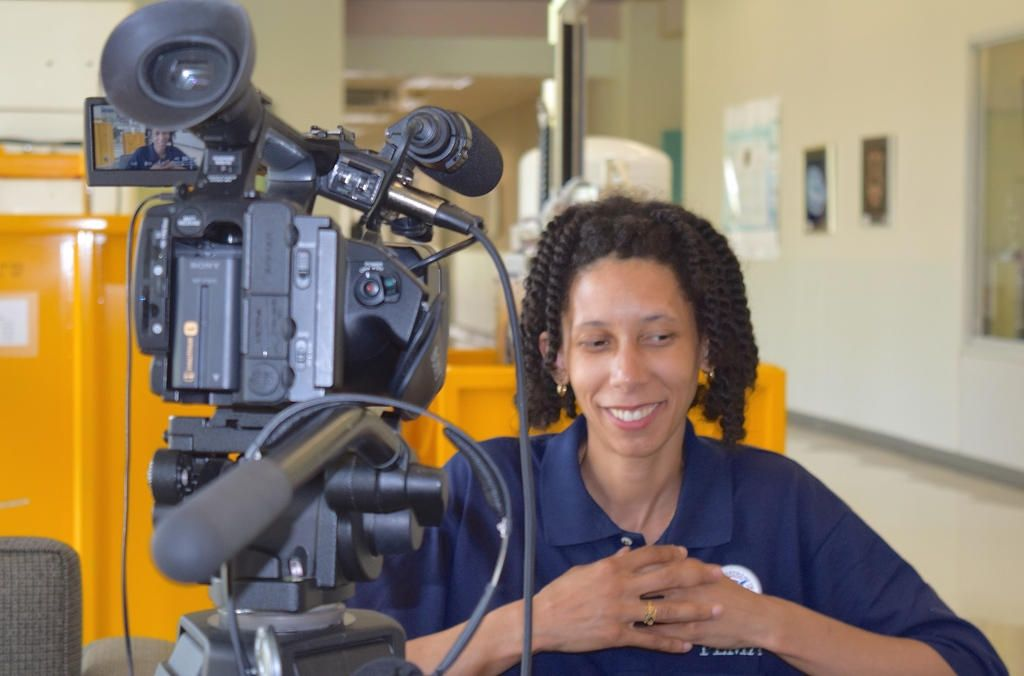
During the early 1970s, Habiba had worked as a model for the Black Fashion Museum in America and as a buyer for a clothing store in Los Angeles. Her passion for fashion continued throughout her life, leading her to establish herself as a fashion designer and entrepreneur.
Fashion Career and Tutu Glam
Habiba Abdul-Jabbar owns and operates Tutu Glam, a clothing line specializing in glamorous and flamboyant tutu skirts. This business venture demonstrates her creative spirit and entrepreneurial abilities, allowing her to establish an identity independent of her famous ex-husband.
Her Facebook page, “RunHabibaRun,” reveals another passion: running. Habiba is an avid runner who has maintained her health and vitality well into her 70s, presenting a vibrant image that defies her age.
Habiba Abdul-Jabbar Biography: A Woman of Substance
Habiba Abdul-Jabbar’s life story is one of transformation, resilience, and quiet strength. From her beginnings as Janice Brown, a Christian schoolteacher from New York, to her role as the wife of an NBA legend, to her emergence as an independent fashion designer and devoted mother, Habiba has navigated multiple identities with grace.
Her educational journey includes graduating from Oberlin College with a degree in Creative Writing in 1997, demonstrating a commitment to personal growth and intellectual development even later in life. This achievement shows that Habiba valued education and self-improvement beyond her role as a celebrity spouse.
Throughout the decades, Habiba has chosen privacy over publicity. While her association with Kareem Abdul-Jabbar made complete anonymity impossible, she has successfully avoided the media circus that often surrounds the families of sports legends. This discretion speaks to her character and her desire to be known for more than her famous ex-husband.
Habiba Abdul-Jabbar Family Legacy
The family legacy that Habiba helped create extends far beyond basketball. Her three children with Kareem have each pursued meaningful careers in journalism, social work, entertainment, and other fields. They represent a new generation that honors their father’s athletic achievements while carving entirely different paths.
Habiba’s influence on her children is evident in their commitment to education—all of Kareem’s children have college degrees, fulfilling one of his primary goals as a father. This educational foundation can be attributed partly to Habiba’s dedication as a mother during the challenging years of separation and divorce.
The extended Abdul-Jabbar family now includes five of Kareem’s children and multiple grandchildren. Despite the complex family dynamics created by multiple relationships, Habiba has maintained positive relationships with her ex-husband and his extended family, prioritizing the well-being of their children above any personal grievances.
The Marriage in Perspective: Reflections and Insights
In rare interviews, Habiba has reflected on her marriage to Kareem with remarkable understanding. She acknowledged: “You sacrifice a lot to get where he is. And he, at one point, sacrificed his family. I realize now it was something he had to do.”
This statement reveals Habiba’s mature perspective on their relationship. Rather than harboring bitterness, she recognized the immense pressures Kareem faced as he built one of the greatest basketball careers in history. The marriage existed at the intersection of personal relationships, religious transformation, cultural expectations, and extraordinary professional demands.
Kareem himself has admitted that he passed through “a primitive stage of evolution” and made mistakes during their marriage. He acknowledged that he demanded much from Habiba while offering little support, and that he struggled to balance family life with his basketball career and religious commitments.
The timing of their relationship—during the civil rights era, amid Kareem’s conversion to Islam, and throughout the peak of his professional career—added layers of complexity that would challenge any marriage. Their story illustrates how even with love and shared faith, the pressures of fame, career demands, and personal identity can strain relationships to the breaking point.
More Read
Current Status and Relationship with Kareem
As of 2025, the current relationship between Habiba Abdul-Jabbar and Kareem Abdul-Jabbar remains private. However, evidence suggests they have maintained a respectful, amicable co-parenting relationship focused on supporting their children.
In 2015, during the premiere of their daughter’s project, both Habiba and Kareem appeared together, demonstrating their ability to set aside past difficulties for their children’s sake. This public appearance revealed that despite their challenging history, they could come together as supportive parents.
Kareem has not remarried since his divorce from Habiba, and he rarely discusses his personal life publicly. After the release of his 2015 documentary “Kareem: Minority of One,” he notably refrained from speaking extensively about his marriage to Habiba, respecting her privacy and their shared history.
Financial Status and Net Worth
Specific details about Habiba Abdul-Jabbar’s net worth are not publicly available. Her former husband, Kareem Abdul-Jabbar, has an estimated net worth of approximately $25 million, accumulated through his legendary basketball career, coaching positions, acting roles, and various business ventures.
Habiba’s income likely comes from her fashion design business, Tutu Glam, and possibly from divorce settlements, though the exact financial arrangements from their divorce have never been disclosed publicly. Her modest lifestyle and preference for privacy suggest she values personal fulfillment over material displays of wealth.
The Woman Behind the Name
What emerges from Habiba Abdul-Jabbar’s story is a portrait of a woman who made significant personal sacrifices for love—converting her religion, changing her name, and navigating the intense scrutiny that comes with being married to a sports icon. Yet she also demonstrated remarkable resilience, rebuilding her life after divorce, pursuing her passions in fashion and running, and raising successful children.
Habiba represents countless women who stand beside famous men, supporting their careers while managing households and raising children, often at great personal cost. Her story reminds us that behind every legendary athlete is a complex family dynamic with real people facing genuine challenges.
Her decision to maintain privacy in an age of constant media exposure shows strength of character. While she could have capitalized on her association with Kareem through tell-all books or media appearances, she chose dignity and discretion instead.
Lessons from Habiba’s Journey
Habiba Abdul-Jabbar’s life offers several important lessons:
Religious Conviction: Her conversion to Islam wasn’t superficial—she fully embraced the faith, including its practices and lifestyle requirements, demonstrating sincere spiritual commitment.
Parental Dedication: Despite a difficult divorce and her ex-husband’s demanding career, Habiba prioritized her children’s well-being, education, and emotional health.
Personal Reinvention: After divorce, she didn’t remain defined by her ex-husband’s fame. She built her own career, remarried, expanded her family, and created an independent identity.
Grace Under Pressure: Habiba maintained dignity throughout public challenges, avoiding media drama and protecting her family’s privacy.
Forgiveness and Understanding: Her mature reflection on the marriage shows she chose understanding over resentment, recognizing the complex pressures Kareem faced.
Conclusion
Habiba Abdul-Jabbar’s story is far more than a footnote in Kareem Abdul-Jabbar’s legendary biography. It is a narrative of personal transformation, cultural bridging, religious conversion, motherhood, resilience, and quiet strength.
From Janice Brown to Habiba Abdul-Jabbar to Habiba Herbert, she has lived multiple lives while maintaining her core values and dedication to family. Her children—Habiba Alcindor, Kareem Abdul-Jabbar Jr., and Sultana Abdul-Jabbar—carry forward a legacy that honors both their parents while creating their own unique paths.
While Habiba may have initially gained fame through her marriage to an NBA legend, her true legacy lies in how she navigated the challenges of that relationship, raised successful children, pursued her own passions, and maintained her dignity throughout decades in the public eye.
In an era where celebrity relationships are often defined by public spectacle and bitter feuds, Habiba Abdul-Jabbar’s approach—characterized by privacy, grace, and focus on family—offers a refreshing alternative. Her story deserves recognition not just as the ex-wife of Kareem Abdul-Jabbar, but as a woman of substance who made difficult choices, overcame significant challenges, and created a meaningful life on her own terms.
The family legacy she helped build extends far beyond basketball courts and championship rings. It encompasses education, creativity, social activism, medical service, and the quiet strength of a mother who put her children first. That is the true measure of Habiba Abdul-Jabbar’s impact and the enduring significance of her remarkable journey.