


A comprehensive analysis of the viral Peter Orszag bald rumors and Peter Orszag wig speculation. Explore the intersection of executive image, public figure scrutiny, media culture, and male hair loss in politics and Wall Street.
Few public figures in modern American policy and global finance have navigated the spotlight quite like Dr. Peter R. Orszag. A brilliant economist who served as Director of the Congressional Budget Office (CBO) and Director of the Office of Management and Budget (OMB) under President Barack Obama—and who now serves as the CEO and Chairman of Lazard—Orszag has spent decades shaping fiscal policy and international finance.
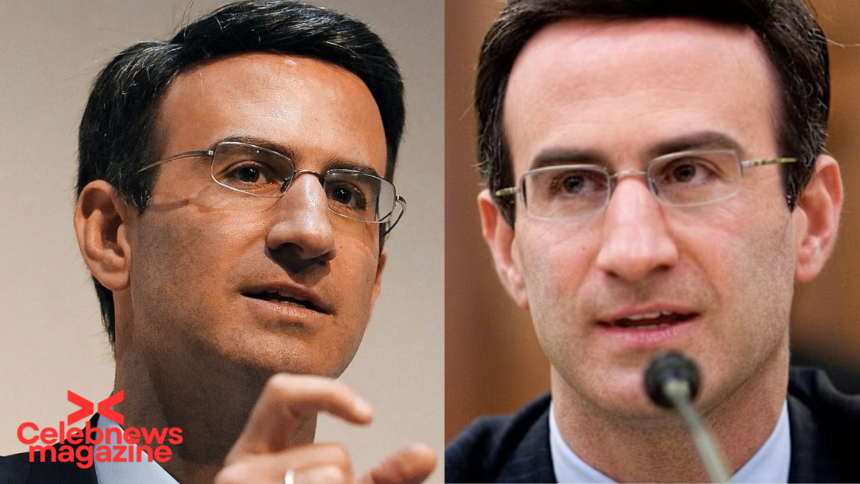
Yet, during his rise to national prominence in Washington, an unexpected, parallel narrative emerged in the media landscape: intense fascination with his personal appearance, specifically concerning the Peter Orszag bald rumors and widespread speculation about whether he wore a Peter Orszag wig or advanced hairpiece.
Why does the aesthetic speculation surrounding a high-ranking budget director or Wall Street CEO matter? In modern public life, executive presence, physical branding, and personal grooming are constantly scrutinized. The debate surrounding Orszag’s hair serves as a premier case study in how media culture treats male vanity, how public figures handle relentless personal speculation, and how the taboo around male pattern baldness operates at the highest levels of government and corporate leadership.
Who is Peter Orszag? From Policy Wunderkind to Wall Street Titan
To understand why the public became so fascinated with Peter Orszag’s appearance, one must first appreciate his unique standing in American public life. Orszag is not a traditional celebrity; he is a quantitative policy mastermind whose intellect catapulted him into top leadership positions at an unusually young age.
Academic and Policy Foundations
Orszag graduated summa cum laude in economics from Princeton University before attending the London School of Economics as a Marshall Scholar, earning a Ph.D. in economics. His early career included key economic advisory roles in the Clinton administration and senior positions at the Brookings Institution.
The CBO and OMB Service
In 2007, at just 38 years old, Orszag was appointed Director of the Congressional Budget Office. Two years later, President Barack Obama selected him to lead the Office of Management and Budget (OMB) during the height of the 2008–2009 Great Recession. Responsible for managing a multi-trillion-dollar federal budget, Orszag became the central architect of major economic recovery packages and healthcare reform logistics.
Transition to Financial Leadership
Following his government service, Orszag transitioned to Wall Street, taking on senior executive roles at Citigroup before rising to become CEO and Chairman of Lazard, one of the world’s premier financial advisory and asset management firms.
┌─────────────────────────────────────────────────────────────────────────────┐
│                       PETER ORSZAG CAREER TIMELINE                          │
├─────────────────┬───────────────────────────────────────────────────────────┤
│ 2007 – 2008     │ Director, Congressional Budget Office (CBO)               │
│ 2009 – 2010     │ Director, Office of Management and Budget (OMB)           │
│ 2011 – 2018     │ Vice Chairman of Corporate & Investment Banking, Citigroup│
│ 2019 – 2023     │ CEO of Financial Advisory, Lazard                         │
│ 2023 – Present  │ CEO and Chairman, Lazard                                  │
└─────────────────┴───────────────────────────────────────────────────────────┘
The Genesis of the Peter Orszag Bald Rumors
During his tenure at the OMB, Washington D.C. experienced a rare phenomenon: a budget director who was treated by media outlets like a Hollywood bachelor. Profiled in The New York Times, The New Yorker, and Vanity Fair, Orszag was famously dubbed Washington’s “nerd heartthrob” or “unlikely sex symbol.”
However, rapid ascent into the cultural spotlight brings hyper-fixation on every detail of a leader’s physical presentation. As high-definition cameras captured Orszag daily at White House briefings, congressional hearings, and Sunday morning news broadcasts, political bloggers and commentators began zeroing in on his hairline.
The Role of Digital Political Journalism
The late 2000s marked the explosion of rapid-fire digital political journalism. Platforms like Gawker, The Huffington Post, Politico, and The New York Observer shifted traditional political coverage by blending policy critique with tabloid-style commentary on DC social culture.
When photos showed slight shifts in Orszag’s hair density, texture, and front alignment, the internet responded with viral speculation. The query Peter Orszag bald rumors began trending as gossip forums debated whether the high-powered economist was losing his hair or using cosmetic interventions to maintain a full appearance.
Dissecting the “Peter Orszag Wig” Speculation
The chatter surrounding Orszag reached a peak when lifestyle and commentary outlets published detailed articles analyzing his hair, going so far as to consult hair restoration experts and hairpiece fitters.
What Driven the “Peter Orszag Wig” Theories?
The theory that Orszag wore a Peter Orszag wig or non-surgical hair system stemmed from three main observation points touted by observers at the time:
- Hairline Density & Forward Sweep: Observers noted a unusually thick forward-brushed hairstyle that appeared consistent despite the intense, long-hour stress of managing the nation’s budget crisis.
- Texture and Color Consistency: In high-intensity press environments, commentators argued that his hair exhibited uniform density that did not align with typical temporal recession common among men in their late 30s and early 40s.
- The NYC Toupee Titan Commentary: In a widely circulated 2010 profile in The New York Observer, famous New York toupee maker Joseph Paris publicly offered unsolicited opinions on various high-profile men. When shown press photos of Orszag, Paris suggested that the budget director appeared to be using a bonded hair enhancement system.
“Name a male public figure with a suspicious hairline, and chances are… people are going to measure it from all four sides. When you see someone in a high-stress position whose coverage doesn’t shift, the rumors start instantly.”
— Media commentary on executive grooming trends, circa 2010
The Visual Timeline: Analyzing Decades of Public Appearances
When evaluating claims of hairpieces versus natural aging, hair restoration analysts look at long-term visual history. Comparing Orszag’s public appearances over a 20-year span provides a clearer picture of his natural hairline progression.
Phase 1: CBO Era (2007–2008)
During his testimony before Congress as CBO Director, Orszag wore a standard side-parted, close-cut hairstyle. Photographs from this period show a standard male hairline with mild temporal recession—typical for a man in his late 30s.
Phase 2: The OMB Era (2009–2010)
At the White House, Orszag adopted a slightly fuller, forward-combed style. Under harsh television lighting, this style created a thicker silhouette, which fueled the online Peter Orszag wig rumors. However, close inspection reveals natural scalp visibility consistent with fine-textured hair rather than a full synthetic cap.
Phase 3: The Wall Street Era (2011–Present)
As Vice Chairman at Citigroup and later CEO of Lazard, Orszag adopted a classic executive cut—shorter on the sides with natural thinning and subtle graying at the temples. This graceful transition to a mature executive look strongly refutes the extreme theories of a full wig, pointing instead to standard hair styling, potential non-surgical grooming products, or natural biological changes.
| Career Era | Role | Hairstyle Characteristics | Media Speculation Level |
| 2007–2008 | CBO Director | Classic side part, slight temporal recession | Minimal |
| 2009–2010 | OMB Director | Fuller front-comb, dense crown appearance | Peak Rumors (Wig/Toupee claims) |
| 2011–2018 | Citigroup Executive | Modern corporate cut, natural thinning | Low |
| 2019–Present | Lazard CEO/Chairman | Mature silver-accented executive trim | Negligible |
The Psychology of Male Hair Loss in High-Stakes Leadership
The fascination with whether a policy expert is balding speaks to a broader psychological dynamic: the role of physical hair in perceptions of male leadership, authority, and vitality.
Youthfulness vs. Authority
In Western corporate and political culture, a full head of hair has historically been associated with youthfulness, energy, and physical vigor. When leaders assume major responsibilities in their late 30s or early 40s—as Orszag did—there is immense pressure to maintain an energetic, youthful presence under constant camera scrutiny.
The Rise of the “Power Bald” Alternative
Interestingly, while figures like Jeff Bezos (Amazon), Lloyd Blankfein (Goldman Sachs), and Steve Ballmer (Microsoft) embraced complete shaving to create a “power bald” corporate image, many executives prefer maintaining their natural hair through cosmetic, medical, or styling means. The public debate over Orszag’s hair highlighted society’s ambivalent feelings toward men who actively manage their hair density versus those who shave completely.
Media Dynamics: Double Standards and Celebrity Optics
The media frenzy surrounding the Peter Orszag bald rumors sheds light on how political journalism treats physical appearance.
Gender and Physical Scrutiny
While female politicians and executives have long endured disproportionate scrutiny regarding their attire, hair, and makeup, the coverage of Peter Orszag demonstrated that male leaders in high-profile roles are also subject to aesthetic critique.
The Commodification of Executive Aesthetics
When political coverage blends with entertainment culture, personal grooming details become weaponized or trivialized. Critics may leverage physical rumors to trivialize an executive’s authority, while supporters view personal care as part of a polished professional image.
Modern Hair Restoration Technology vs. Media Myths
To understand the context of the Peter Orszag wig discourse, one must separate pop-culture myths about “toupees” from modern hair restoration and grooming techniques.
Non-Surgical Systems vs. Traditional Wigs
Pop culture often envisions “wigs” as loose, unnatural hairpieces that shift unexpectedly. Modern non-surgical hair systems use ultra-thin polyurethane or lace bases micro-bonded directly to the scalp with medical adhesives, allowing users to swim, shower, and exercise without detection.
Surgical Hair Restoration (FUE/FUT)
- Follicular Unit Extraction (FUE): Individual hair follicles are harvested from donor zones and transplanted to thinning areas, leaving no linear scars.
- Follicular Unit Transplantation (FUT): A strip of tissue is removed to yield high-density grafts.
Medical Maintenance and Styling Powders
Many executives utilize non-surgical therapies—such as topical Minoxidil, oral Finasteride, low-level laser therapy, or keratin fiber building powders—which add temporary volume under studio lighting without requiring surgery or hair systems.
Practical Examples: How Executives Manage Aesthetic Scrutiny
When high-profile leaders face intense media scrutiny regarding their physical appearance, they typically adopt one of three public relations strategies.
Practical Example 1: The Silence & Substantiality Strategy (The Orszag Approach)
When the Peter Orszag bald rumors and hairpiece jokes circulated in Washington, Orszag chose never to address them publicly. By maintaining complete silence on personal vanity topics, he ensured that official White House briefings focused exclusively on fiscal policy, healthcare reform, and GDP projections.
- Key Takeaway: Refusing to dignify aesthetic rumors prevents the story from gaining fresh news cycles.
Practical Example 2: The Radical Transparency Strategy
Some modern corporate leaders choose total openness regarding cosmetic procedures. When executives acknowledge hair transplants or cosmetic treatments on social media or in interviews, they defuse tabloid speculation immediately by controlling the narrative.
- Key Takeaway: Transparency eliminates mystery and neutralizes gossip before it builds momentum.
Practical Example 3: The Complete Brand Pivot (Embracing the Shave)
Other executives facing pattern hair loss opt to bypass maintenance altogether by shaving their heads entirely. This creates a clean, decisive visual brand that shifts public perception from “man battling hair loss” to “confident, streamlined leader.”
- Key Takeaway: A bold aesthetic change can communicate confidence and singular focus on performance.
Executive Image Consulting in Washington and Wall Street
Behind every major C-suite executive or cabinet official is an ecosystem of media training and image strategy. In high-stakes environments like congressional testimony or quarterly earnings calls, personal presentation is meticulously calibrated.
                  ┌──────────────────────────────────────┐
                  │    EXECUTIVE IMAGE CALIBRATION       │
                  └──────────────────┬───────────────────┘
                                     │
         ┌───────────────────────────┼───────────────────────────┐
         ▼                           ▼                           ▼
┌──────────────────┐       ┌──────────────────┐       ┌──────────────────┐
│ STUDIO LIGHTING  │       │ GROOMING & HAIR  │       │ WARDROBE & FIT   │
│ Powder & anti-   │       │ Anti-shine spray,│       │ Tailored cuts,   │
│ glare prep for   │       │ subtle density   │       │ matte fabrics to │
│ HD broadcast     │       │ management       │       │ avoid reflection │
└──────────────────┘       └──────────────────┘       └──────────────────┘
- HD Broadcast Adjustments: High-definition cameras accentuate scalp shine and thinning hair under studio spotlights. Professional makeup artists routinely apply anti-shine powders and matte sprays to executives before TV appearances.
- Hair Density Management: Hair stylists serving political and financial leaders often cut hair shorter on the sides to create an optical illusion of greater volume on top.
- Lighting Awareness: Keynote stages and congressional hearing rooms use overhead halogen or LED spotlights that shine directly on the crown, making mild thinning look far more dramatic on camera than in person.
Playbook for Leaders Facing Physical Scrutiny and Personal Rumors
For executives, public figures, and rising professionals thrust into the public eye, managing unsolicited commentary about personal appearance requires a strategic framework.
1. Maintain Institutional Focus
Never allow personal aesthetic discussions to intersect with your professional deliverables. Keep press conferences, client meetings, and public statements focused entirely on corporate strategy and performance metrics.
2. Standardize Your Visual Brand
Select a professional, low-maintenance aesthetic and stick with it consistently. Dramatic, sudden changes in hair length, color, or styling attract unnecessary media speculation.
3. Leverage Professional Grooming Support
Work with experienced media groomsmen who understand how lighting, camera angles, and high-definition broadcast technologies affect physical presentation.
4. Differentiate Criticism from Noise
Recognize that gossip regarding hairstyles, clothing, or physical traits is often a byproduct of high visibility rather than a reflection of leadership competence.
Conclusion: Beyond the Hair—What the Orszag Debacle Teaches Us About Modern Leadership
The persistent fascination with the Peter Orszag bald rumors and Peter Orszag wig theories says far more about modern media culture than it does about the accomplished economist himself.
As Orszag built an extraordinary career—transitioning seamlessly from top-tier government roles in the Obama administration to leading one of Wall Street’s most distinguished investment banks—his professional achievements consistently outweighed the superficial noise of Washington tabloids.
Ultimately, the debate serves as a compelling reminder of the hyper-visual age in which leaders operate. Whether in the halls of Congress or the executive suites of Lazard, leaders are judged under the bright lights of public scrutiny. The leaders who succeed—like Orszag—are those who remain unflappable, allowing their strategic vision and intellect to define their legacy long after the gossip fades.