






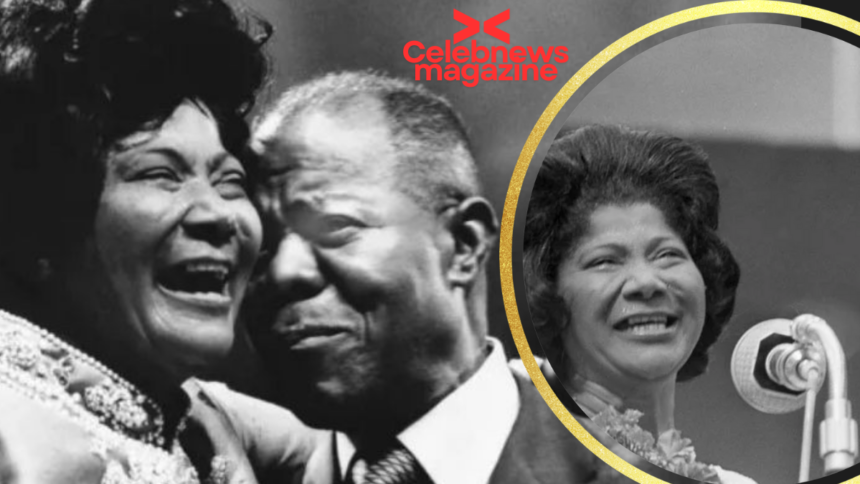

Discover the life story of Isaac Hockenhull, Mahalia Jackson’s first husband. Learn about their marriage, his career, their divorce, and his biography in this comprehensive profile of the man behind the gospel legend.
Quick Facts About Isaac Hockenhull
| Detail | Information |
|---|---|
| Full Name | Isaac Lanes Grey Hockenhull |
| Known For | First husband of gospel legend Mahalia Jackson |
| Profession | Chemist, postal worker |
| Marriage to Mahalia Jackson | 1936 |
| Divorce | 1941 (separated), finalized 1943 |
| Years of Marriage | Approximately 5-7 years |
| Children | None |
| Education | College-educated chemist |
| Notable Trait | Aspiring entrepreneur with dreams in business |
| Death | Details largely undocumented |
Isaac Hockenhull Biography: The Man Behind the Gospel Queen
Isaac Lanes Grey Hockenhull remains a somewhat enigmatic figure in American history, primarily remembered as the first husband of Mahalia Jackson, the woman who would become known as the “Queen of Gospel.” While his own achievements have been overshadowed by his famous wife’s towering legacy, Isaac’s story offers a fascinating glimpse into the life of an educated Black man navigating the challenges of the Great Depression era.
Born in the early 20th century, Isaac Hockenhull was a college-educated chemist at a time when higher education remained largely inaccessible to African Americans. This accomplishment alone speaks volumes about his determination, intellect, and the support system that enabled him to pursue advanced studies during one of America’s most challenging economic periods.
Isaac’s educational background set him apart from many of his contemporaries. Chemistry was a demanding field that required rigorous academic training, analytical thinking, and access to resources that were often denied to Black students. The fact that he completed this education demonstrates not only his personal capabilities but also his family’s commitment to providing opportunities despite the systemic barriers of the era.
Beyond his scientific training, Isaac harbored entrepreneurial ambitions. He possessed dreams of business ownership and financial independence, aspirations that were particularly bold for a Black man in the 1930s when discriminatory practices limited economic opportunities at nearly every turn. His vision extended beyond simply securing employment; he wanted to build something of his own, to create wealth and stability through business ventures.
Isaac Hockenhull Mahalia Jackson Husband: A Union of Two Worlds
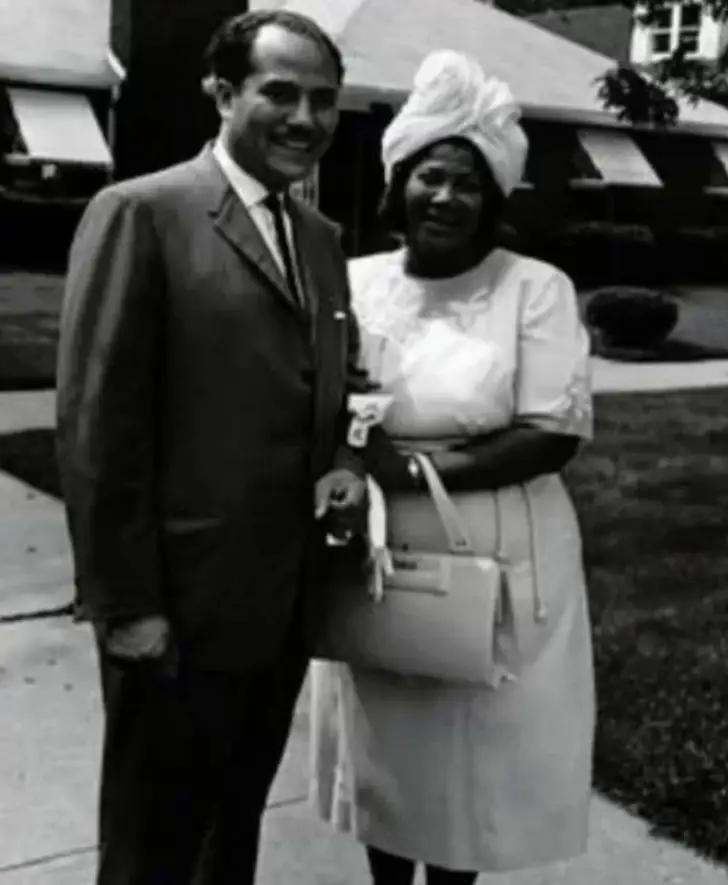
The marriage between Isaac Hockenhull and Mahalia Jackson in 1936 brought together two individuals from markedly different backgrounds, each with their own dreams and aspirations. Mahalia, who had migrated from New Orleans to Chicago, was beginning to make her mark in the gospel music world, singing with passion and power that would eventually captivate millions.
Isaac, with his education and professional credentials, represented a certain social status that was appealing in the Black community of that era. As a chemist and postal worker, he had achieved a level of stability that many could only dream of during the Depression. For Mahalia, who had grown up in poverty in New Orleans, Isaac’s education and prospects likely seemed promising.
The couple’s early years together coincided with Mahalia’s developing career in gospel music. She was singing in churches throughout Chicago, building a reputation for her extraordinary vocal abilities and her deeply spiritual interpretations of gospel hymns. Her voice carried a raw emotional power that moved audiences to tears, and word of her talent was beginning to spread beyond the local church circuit.
However, the marriage soon revealed fundamental differences in their visions for the future. Isaac saw Mahalia’s vocal talents as an asset that could be leveraged for financial gain. He encouraged her to expand beyond gospel music into more commercially lucrative secular genres like blues and jazz. These musical styles were experiencing significant popularity, and performers could earn substantially more money than gospel singers, who often performed for little or no compensation in churches.
Mahalia, however, held firm convictions about her calling. She believed her gift was meant to serve God and to uplift people spiritually, not to be commercialized for profit. Gospel music wasn’t simply a career choice for her—it was a sacred calling, a way to express her deep faith and to inspire others. The suggestion that she should sing secular music felt like a betrayal of her purpose and her relationship with God.
This fundamental disagreement created ongoing tension in their marriage. Isaac’s practical, business-minded approach clashed with Mahalia’s spiritual convictions. Where he saw untapped financial potential, she saw a divine mission that couldn’t be compromised for money.
Isaac Hockenhull Career: Ambitions and Reality
Isaac Hockenhull’s professional life reflected both the possibilities and limitations faced by educated African Americans in the early-to-mid 20th century. His work as a chemist demonstrated his intellectual capabilities and specialized training, placing him among the small percentage of Black professionals in scientific fields during that era.
However, the economic realities of the time period meant that even educated Black professionals often struggled to find positions that matched their qualifications or aspirations. Discrimination in hiring practices, limited advancement opportunities, and wage disparities meant that many talented individuals worked in positions below their skill level or faced constant financial pressure despite their education.
To supplement his income and provide greater financial stability, Isaac also worked as a postal worker. The United States Postal Service was one of the few federal employers that offered relatively stable employment opportunities for African Americans, with better pay and working conditions than many private sector jobs available to Black workers at the time.
Despite his steady employment, Isaac continued to harbor entrepreneurial dreams. He wanted to launch business ventures that would provide greater financial independence and wealth-building opportunities. These ambitions were entirely reasonable, but they required capital, connections, and favorable circumstances—all challenging to obtain for Black entrepreneurs facing systemic discrimination in lending, business licensing, and market access.
Isaac’s hopes that Mahalia’s talents could help fund these business ventures created a recurring source of conflict in their marriage. From his perspective, her refusal to pursue more lucrative performing opportunities was frustrating, an obstacle to the financial success and security he envisioned for them both. He couldn’t understand why she would limit herself to gospel when her voice could command higher fees in secular venues.
What Isaac may have underestimated was the depth of Mahalia’s spiritual commitment and the authenticity of her calling. For her, no amount of money could justify compromising her relationship with God or abandoning what she believed was her divine purpose. This wasn’t stubbornness or a lack of ambition—it was faithfulness to a conviction that defined her entire identity.
Isaac Hockenhull Divorce: When Dreams Diverge
The marriage between Isaac Hockenhull and Mahalia Jackson began to unravel as their fundamental differences became increasingly impossible to reconcile. The couple separated around 1941, though their divorce wasn’t finalized until 1943. Those years of separation reflected the painful reality that despite whatever affection they may have once shared, their visions for life were simply incompatible.
The central conflict remained Mahalia’s unwavering commitment to gospel music versus Isaac’s desire for her to pursue more commercially profitable secular music. This wasn’t merely a disagreement about career strategy—it represented a deeper divide about values, purpose, and the role of faith in their lives.
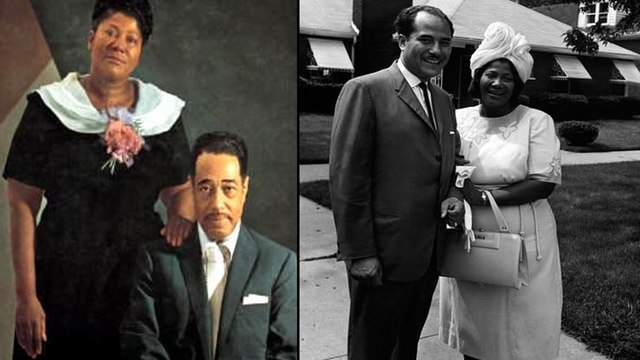
Isaac’s pressure on Mahalia to change the direction of her career ultimately became unbearable for her. She later described feeling that her first husband wanted to control her career in ways that violated her spiritual convictions. The constant tension over this issue eroded whatever foundation their marriage had once possessed.
Beyond the career disputes, there were likely other contributing factors to their marital breakdown. Financial stress was probably significant, as Mahalia’s gospel singing brought in little income during their marriage, while Isaac’s entrepreneurial dreams required capital they didn’t have. The frustration of working hard without achieving the financial success he envisioned may have created additional strain.
The couple had no children together, which may have made the decision to separate somewhat less complicated, though no divorce is truly simple. By the time their divorce was finalized in 1943, both individuals were ready to pursue their own paths separately.
For Mahalia, the end of her first marriage marked a turning point. Free from the pressure to compromise her musical mission, she doubled down on her commitment to gospel music. This decision, which Isaac had opposed, would ultimately lead to her extraordinary success and international fame as the greatest gospel singer of her generation.
Isaac Hockenhull Life Story: Legacy and Aftermath
Following his divorce from Mahalia Jackson, Isaac Hockenhull largely disappeared from public records and historical documentation. Unlike his famous ex-wife, whose career trajectory took her to unprecedented heights of fame and influence, Isaac returned to private life, his story becoming a footnote in Mahalia’s remarkable biography.
The details of Isaac’s later years remain largely unknown. Whether he ever achieved his entrepreneurial dreams, whether he remarried, and even the circumstances of his death have not been widely documented or preserved in historical records. This absence of information is not unusual for individuals who weren’t themselves public figures, but it does make a complete assessment of his life story challenging.
What we can recognize, however, is that Isaac Hockenhull represented a particular type of African American experience in the early-to-mid 20th century. He was an educated man with legitimate aspirations for success and financial security, navigating a society that placed enormous obstacles in his path. His desire to build wealth and achieve stability through business ventures was entirely rational and understandable.
The tension between Isaac’s practical ambitions and Mahalia’s spiritual calling highlights a broader question that many couples face: how do you reconcile different visions of success and purpose? For Isaac, success likely meant financial security, business ownership, and the material comforts that money could provide. For Mahalia, success meant faithfulness to her calling, spiritual authenticity, and using her gifts in service to God and community.
Neither vision was inherently wrong, but they were fundamentally incompatible within the context of their marriage. Isaac’s story serves as a reminder that behind every famous figure are relationships, conflicts, and human stories that shaped their journey.
Mahalia Jackson would go on to marry again—her second husband was Sigmund Galloway, though that marriage also ended in divorce. She eventually achieved the kind of success that vindicated her decision to remain committed to gospel music, earning international acclaim, performing at major venues including Carnegie Hall and the Newport Jazz Festival, and singing at significant historical moments including Dr. Martin Luther King Jr.’s March on Washington in 1963.
More Read

Reflections on a Complex Marriage
The story of Isaac Hockenhull and Mahalia Jackson’s marriage offers valuable insights into the challenges faced by ambitious individuals trying to build lives together despite divergent values and goals. Isaac was not a villain in this story, nor was Mahalia unreasonable in her convictions. They were simply two people whose dreams couldn’t coexist within the same marriage.
Isaac’s legacy, such as it is, remains intertwined with Mahalia’s story. He was the first husband, the man who tried to steer her career in a different direction, the partner whose vision she ultimately rejected in favor of her spiritual calling. History has largely vindicated Mahalia’s choice, as her commitment to gospel music made her one of the most influential musical figures of the 20th century.
Yet we might also spare some sympathy for Isaac, an educated man with reasonable aspirations who found himself married to a woman of such extraordinary talent and such unshakeable conviction that compromise was impossible. His story reminds us that behind every great success are often relationships that didn’t survive the journey, people who wanted different things, and paths that diverged despite initial hopes for a shared future.
The marriage between Isaac Hockenhull and Mahalia Jackson lasted only a handful of years, but it played a crucial role in shaping the trajectory of one of gospel music’s greatest legends. In standing firm against Isaac’s pressure to commercialize her gifts, Mahalia set the course that would define her career and her legacy, ensuring that gospel music would remain at the heart of everything she did.