






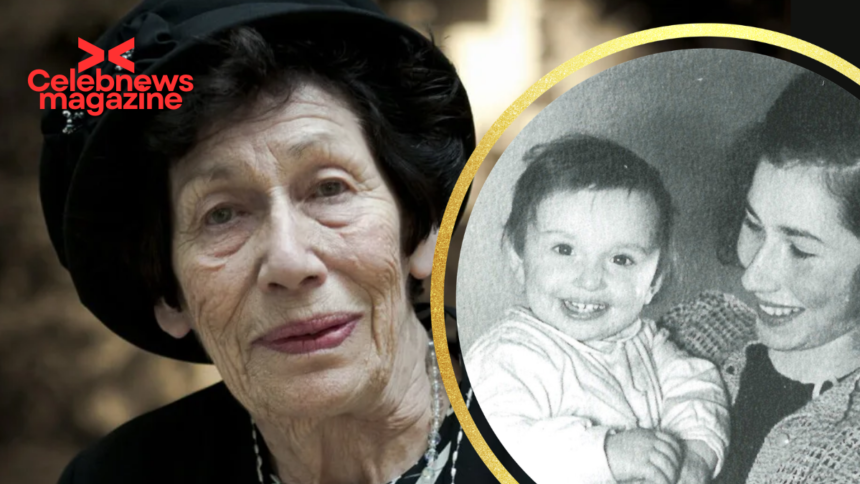

Discover the powerful life story of Gabi Goslar, Holocaust survivor and sister of Hannah Pick-Goslar — the best friend of Anne Frank. Learn about her childhood in Bergen-Belsen, survival on the Lost Train, and her enduring legacy.
Quick Facts: Gabi Goslar at a Glance
| Full Name | Gabrielle “Gabi” Goslar |
| Date of Birth | circa 1940 (exact date unconfirmed) |
| Place of Birth | Frankfurt, Germany |
| Nationality | German-Jewish; later Israeli |
| Sister | Hannah Pick-Goslar (née Hanneli Goslar) |
| Parents | Hans Goslar & Ruth Judith Klee |
| Concentration Camp | Bergen-Belsen, Nazi Germany |
| Connection to Anne Frank | Sister of Anne Frank’s best friend, Hannah |
| Rescue | Survived aboard the “Lost Train” near Tröbitz, Germany |
| Liberation | April–May 1945 by Soviet forces |
| Later Life | Settled in Israel |
Gabi Goslar Biography
Gabi Goslar is one of the lesser-known yet deeply significant figures connected to the Holocaust narrative that touched millions of lives during World War II. Born into a Jewish family in Frankfurt, Germany, around 1940, Gabi was the younger sister of Hannah Pick-Goslar — known to the world primarily as the devoted best friend of Anne Frank. While history has rightfully preserved Anne Frank’s diary and Hannah’s own remarkable survival story, Gabi’s journey through the horrors of the Nazi regime deserves equal recognition and deep respect.
Her life, even in its earliest years, was marked by fear, displacement, and the relentless persecution of Jewish families across Europe. Gabi was just an infant when her family was already living under the mounting threat of the Nazi regime, which had been steadily tightening its grip on Jewish communities since the early 1930s. By the time Gabi was old enough to have any awareness of the world around her, that world had already become a place of terror, loss, and survival at all costs.
Gabi Goslar Family History
The Goslar family had deep roots in German Jewish life. Gabi’s father, Hans Goslar, was a prominent civil servant and journalist who had served in the Prussian government before the Nazi rise to power made his position untenable. Her mother, Ruth Judith Klee, came from a respected Jewish family, and together her parents built a household grounded in faith, education, and community values.
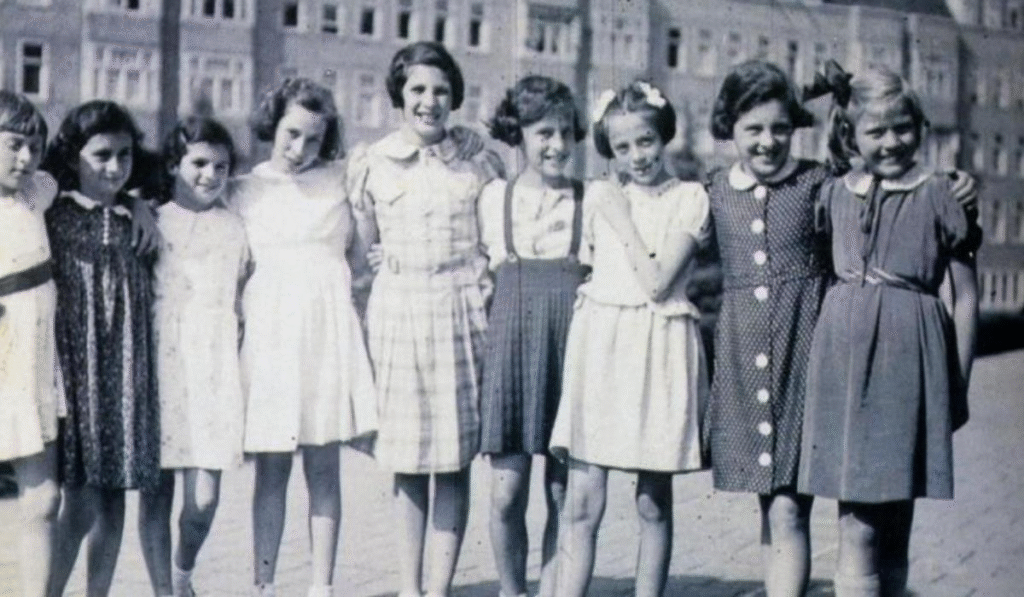
When Adolf Hitler became Chancellor in 1933, Hans Goslar lost his government position almost immediately. The family, recognizing the gathering storm, relocated to Amsterdam in the Netherlands — joining thousands of other German Jewish refugees seeking safety in a more tolerant country. It was in Amsterdam that Hannah, the eldest daughter, formed her famous and deeply affectionate friendship with Anne Frank, whose family had similarly fled Germany for the Netherlands.
Gabi was born into this refugee household, arriving into a family that had already been uprooted once and was about to face catastrophe again. In 1942, Ruth Goslar died following complications from childbirth — a devastating loss that left Hans Goslar to care for his two daughters, Hannah and the very young Gabi, alone in a city that was rapidly falling under Nazi control following Germany’s occupation of the Netherlands in 1940.
Gabi Goslar’s Childhood in the Holocaust
Few experiences in human history compare to the trauma of a childhood lived under Nazi occupation. For Gabi Goslar, growing up meant growing up in hiding, in fear, and ultimately in a concentration camp. After the Nazi occupation of Amsterdam deepened, Jewish families were subjected to increasingly brutal restrictions — curfews, deportations, forced wearing of the yellow Star of David, and systematic removal from schools and public life.
The Goslar family was eventually arrested and deported. Unlike many Jewish families in Amsterdam who were sent directly to Auschwitz, the Goslars were initially held in Westerbork, a transit camp in the northeastern Netherlands, before being transferred to Bergen-Belsen concentration camp in Germany. Their status as holders of South American immigration papers gave them a temporary, precarious classification as exchange Jews — people the Nazis believed might be useful for prisoner exchanges with Allied nations.
For the very young Gabi, the realities of Bergen-Belsen — starvation, disease, the constant presence of death — were the defining conditions of her earliest conscious years. She was entirely dependent on her older sister Hannah for care and protection, since their father Hans had grown gravely ill in the camp, eventually dying there in February 1945. Hannah, still a teenager herself, assumed the role of Gabi’s primary caretaker under impossible circumstances.
Gabi Goslar at Bergen-Belsen
Bergen-Belsen was not an extermination camp in the formal sense, but it was a place of systematic death nonetheless. Tens of thousands of prisoners died there from starvation, typhus, dysentery, and other diseases that spread through the overcrowded, unsanitary barracks. By the time Gabi and Hannah were held there, conditions had deteriorated catastrophically, with food supplies all but nonexistent and bodies piling up faster than they could be buried.
It was at Bergen-Belsen, in early 1945, that one of the most poignant episodes in Holocaust memory took place. Hannah Pick-Goslar, separated from Anne Frank by a dividing fence between two sections of the camp, was able to speak with her childhood friend through the barrier in the darkness of night. Anne Frank, not knowing Hannah was at Bergen-Belsen, was shocked and devastated. They threw a small parcel of food over the fence to each other — a gesture of love in the middle of an abyss. Anne Frank died at Bergen-Belsen shortly afterward, in late February or early March 1945, just weeks before the camp’s liberation.
Throughout this period, Gabi was with Hannah — a silent witness, a child being held together by her older sister’s fierce will to survive and protect. Hannah’s instinct to keep Gabi alive was one of the animating forces of her own survival.
Gabi Goslar’s Anne Frank Connection
Although Gabi Goslar was too young to have a personal, conscious friendship with Anne Frank, her connection to Anne is inseparable from her family’s story. Anne Frank and Hannah Pick-Goslar were among the closest of friends in Amsterdam, and Anne wrote warmly about Hannah — whom she called Hanneli or Lies — in her famous diary.
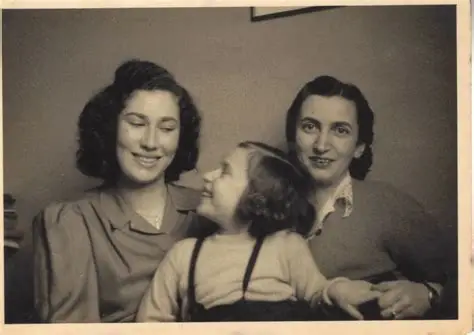
Anne Frank’s diary entry describes Hanneli (Hannah) with great tenderness and also with a pang of guilt, having dreamed of her friend in distress. These lines have been read by millions of people worldwide as a window into the deep human bonds that the Holocaust tried to destroy. For the Goslar family, including Gabi, this connection means their story is forever woven into one of the most widely read and deeply felt testimonies of the twentieth century.
Hannah’s account of speaking with Anne through the fence at Bergen-Belsen became one of the most haunting and widely cited eyewitness testimonies of the Holocaust. It humanizes Anne Frank beyond the pages of her diary and places Hannah — and by extension, the entire Goslar family including Gabi — at the very heart of this historical memory.
Gabi Goslar: The Lost Train Survivor
In April 1945, as Allied forces closed in on Nazi Germany, the SS began evacuating concentration camp prisoners in desperate and chaotic marches and transports. Hannah and Gabi Goslar were among those loaded onto a train departing Bergen-Belsen — a journey with no clear destination as the Reich crumbled around them.
The train carried thousands of sick, starving, and dying prisoners. It wandered for days through a collapsing Germany, stopping and starting as the SS guards grew increasingly uncertain of where to take their charges. Hannah herself was gravely ill, barely clinging to life. Gabi, still very young, was utterly dependent on her sister and the thin thread of will that kept Hannah alive.
The train eventually came to a stop near the small German village of Tröbitz, in what is now the state of Brandenburg. Soviet forces arrived and liberated the prisoners on April 23, 1945. This transport has since become known in Holocaust history as the Lost Train — a symbol both of the regime’s desperate final violence and of miraculous survival against all odds. Hannah and Gabi were among its survivors. Hannah later recalled that she weighed barely 30 kilograms at the time of liberation and was near death.
Gabi Goslar Life Story: After the Liberation
Liberation did not mean an immediate return to health or safety. The survivors of the Lost Train required extensive medical care, and many continued to die in the weeks following liberation due to the severity of their malnutrition and illness. Hannah recovered slowly, and Gabi, though young and physically more resilient in some ways, had nonetheless suffered the profound trauma of her earliest years.
The sisters had surviving family members, notably their paternal grandfather in Switzerland, who helped facilitate their care and eventual recovery. In the years following the war, Hannah and Gabi made their way to what would become the State of Israel, settling in a land that was being built as a homeland for the Jewish people — many of whom, like the Goslar sisters, had lost nearly everything to the Nazi genocide.
In Israel, Hannah built a full life, eventually becoming a nurse and later a nursing administrator, marrying and raising children and grandchildren. Gabi, her younger sister, also made her life in Israel. While Hannah became a relatively public figure — frequently interviewed and honored as a Holocaust survivor with a direct connection to Anne Frank’s story — Gabi lived more privately, her story existing in the shadow of her older sister’s more prominent testimony.
Gabi Goslar Age and Later Years
Born around 1940, Gabi Goslar would be in her mid-eighties as of 2025. Specific details of her personal life in adulthood — her marriage, career, and family — have not been widely documented in the public record, consistent with her more private life compared to her sister Hannah’s public profile.
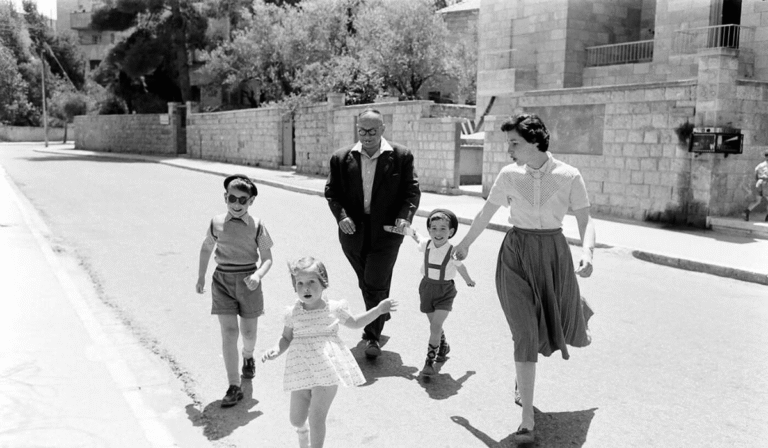
Hannah Pick-Goslar herself passed away on October 28, 2022, at the age of 93, in Jerusalem. Hannah’s death was widely mourned internationally as the loss of one of the last living people who had known Anne Frank personally and who had survived Bergen-Belsen to tell the world what happened there. At the time of Hannah’s death, Gabi was noted as her surviving sibling, a quiet but enduring testament to the family’s survival.
Gabi’s life is a living piece of Holocaust history — a reminder that survival is not only a matter of record but of lived experience, and that the children who endured the camps carried their trauma and their resilience forward into long lives that deserve acknowledgment.
More Read

Gabi Goslar’s Legacy and Historical Significance
The story of Gabi Goslar sits at an important intersection in Holocaust memory. She is a direct survivor — someone who physically lived through Bergen-Belsen and the Lost Train — and she is also a familial witness to some of the most documented moments of that era, by virtue of being the younger sister of Hannah Pick-Goslar.
In recent years, broader attention has been brought to the Goslar family’s story through the 2022 biographical film My Best Friend Anne Frank, a Dutch production that dramatized Hannah and Anne’s friendship and Hannah’s survival. Though Gabi appears in this story as a young child, her presence in the narrative reinforces the human stakes — the babies and toddlers who were carried through the camps and, in some cases, lived to grow old.
Holocaust education increasingly emphasizes that survivors are not a monolith — that their experiences varied enormously and that the youngest survivors often have stories told primarily through the eyes of those who protected them. Gabi Goslar’s life is one such story: held together by her sister’s love, carried forward by extraordinary fortune, and deserving of its own recognition in the full tapestry of Holocaust memory.
Her survival, and her life built afterward in Israel, stands as a quiet but profound affirmation of Jewish continuity — the very thing the Nazi regime sought to destroy.