



Discover Keiko Fujimoto’s full biography — Japanese actress, visual artist, and ex-wife of convicted Theranos executive Sunny Balwani. Explore her career, divorce, net worth, and where she is now.
Quick Facts: Keiko Fujimoto at a Glance
| Detail | Information |
|---|---|
| Full Name | Keiko Fujimoto |
| Date of Birth | June 23, 1977 |
| Birthplace | Tokyo, Japan |
| Nationality | Japanese-American |
| Profession | Actress, Artist, Television Personality |
| Known For | Ex-wife of Sunny Balwani; acting roles in Japanese TV |
| Ex-Husband | Ramesh “Sunny” Balwani |
| Marriage End | December 2002 |
| Children | None |
| Height | 5 feet 8 inches (1.72 m) |
| Weight | ~60 kg |
| Net Worth (est.) | ~$6 million |
| TV Debut | Takajin Mune Ippai (1994) |
| Notable Show | Unfair (2006) |
| Art Exhibition | SOMA Artist Studios, San Francisco (2013) |
| Current Status | Private life; believed to be based in Japan |
Keiko Fujimoto Biography: The Woman Behind the Headlines
Most people first heard the name Keiko Fujimoto in connection with one of Silicon Valley’s biggest scandals — not because she was part of it, but because she was once married to someone who was. Yet reducing Keiko to a footnote in someone else’s story would be doing her a real disservice. She is, in her own right, a multifaceted creative personality: a trained actress, a visual artist, and a woman who quietly rebuilt her life far from the glare of courtrooms and media cycles.
Keiko Fujimoto was born on June 23, 1977, in Tokyo, Japan. She grew up immersed in the aesthetics and cultural traditions of Japan — values that would later manifest in her artwork and her overall approach to life. At some point she relocated to the United States, eventually settling in San Francisco, California, where she pursued both her professional and personal ambitions. She is described by those familiar with her work as thoughtful, composed, and creatively driven — qualities that seem to define how she has handled even the most turbulent chapters of her life.
Keiko Fujimoto Actress Career: From Tokyo Screens to Small Roles Abroad
Long before she became tangentially associated with Silicon Valley drama, Keiko Fujimoto was building a modest but respectable career as a television actress in Japan. Her on-screen journey began in 1994 when she appeared on the Japanese television program Takajin Mune Ippai, a popular variety and talk show that gave her early exposure to the entertainment industry. It was her first notable credit, and it set the stage for what would be a career that balanced acting with her deeper passion for visual art.
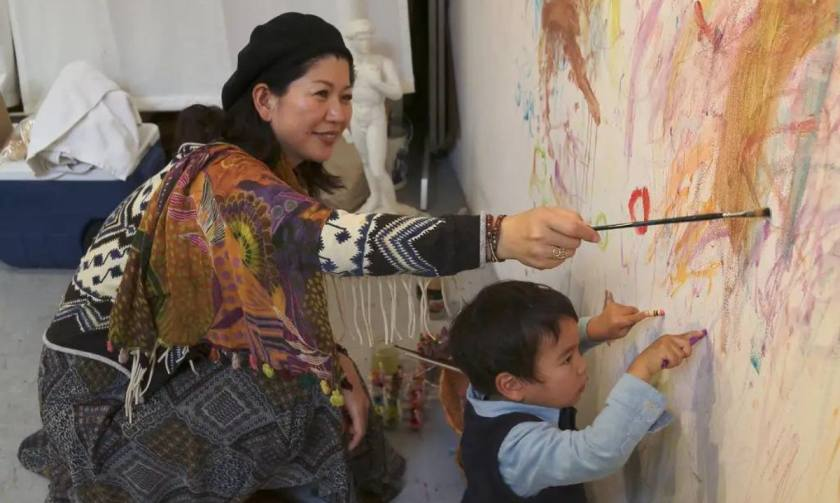
Years later, in 2006, Keiko returned to acting with a role in the Japanese mini-series Unfair, a crime drama that enjoyed considerable popularity. In it, she played the role of an announcer — a smaller part, but one that demonstrated her continued presence in the entertainment world. She also accumulated minor roles in productions such as Yoi Don! and P.O.V., rounding out a filmography that, while not headliner-level, reflects consistent professional engagement.
Her acting career was never the headline-grabbing kind, and she seems to have preferred it that way. Keiko’s identity has always been broader than any single role — she wore many hats, and her artistic pursuits were just as central to who she was as her screen appearances.
Keiko Fujimoto Japanese TV Shows: A Closer Look at Her Screen Work
For those researching Keiko Fujimoto’s television work specifically, the picture is one of steady participation rather than stardom. Her debut on Takajin Mune Ippai in 1994 introduced her to Japanese audiences at a time when variety programming was a cultural staple. The show, hosted by the late Yasushi Takajin, was known for frank and often emotional conversations — quite different from the polished celebrity circuit.
Her 2006 appearance in Unfair came during a period when Japanese crime dramas were at a creative peak, and the series — starring Ryoko Shinohara — garnered high ratings and critical acclaim. To have a credit in such a production, even in a supporting capacity, speaks to Keiko’s professional standing in the industry.
The roles in Yoi Don! and P.O.V. added to her acting portfolio, though detailed records of these appearances remain sparse. Like much of her personal life, Keiko has not sought to amplify or publicize these credits, leaving researchers piecing together her career from available records.
Keiko Fujimoto and Sunny Balwani: A Marriage Born at Microsoft
The story of how Keiko Fujimoto and Ramesh “Sunny” Balwani came together is, in many ways, a product of the 1990s tech boom. Balwani was working as a sales manager for Microsoft in Northern California when the two met. The details of their courtship are not widely documented, but they eventually married and settled together in San Francisco, California.
By most accounts, their life together in San Francisco appeared relatively normal. Balwani at that time was navigating the dizzying world of dot-com entrepreneurship — in late 1999 he left Microsoft to join CommerceBid.com as president, a software startup that facilitated online auctions. The company was acquired by Commerce One in 1999, and when Balwani sold his shares in July 2000, he reportedly netted close to $40 million — just before the dot-com bubble burst and the company collapsed.
During this same period, Keiko was pursuing her art and her own career. The couple had no children together, and beyond their shared San Francisco address, little of their marriage has ever been made public.
Keiko Fujimoto Divorce: The End of a Marriage and the Start of a New Chapter
The marriage between Keiko Fujimoto and Sunny Balwani came to an end in 2002. Keiko filed for divorce in February of that year at the San Francisco County Superior Court, and the proceedings were finalized by December 2002. The reasons the couple gave publicly were minimal — neither has spoken at length about what led to the split.
What emerged later, however, painted a more complicated picture. In 2002, the same year Keiko filed for divorce, Balwani traveled to Beijing where he met a then-18-year-old Elizabeth Holmes — a Stanford student who would go on to found Theranos. Whether the relationship with Holmes began before or during the divorce proceedings is not entirely clear, but by October 2004 Balwani was listed on property documents as a “single man,” and Holmes had moved into his Palo Alto condominium shortly thereafter.
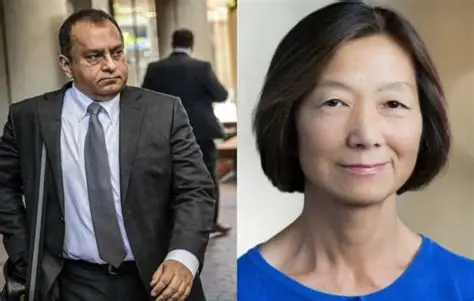
For Keiko, the divorce marked not just an end but a pivot. She stepped away from the shared life in San Francisco, and in doing so, she also stepped well away from whatever Balwani’s future would hold — including the scandal that would eventually consume him.
Keiko Fujimoto Theranos Connection: Innocent Bystander to History
One of the most important things to understand about Keiko Fujimoto’s relationship to Theranos is precisely that she had none — at least not directly. By the time Balwani joined Theranos in 2009 as its president and COO, Keiko had been divorced from him for nearly seven years. She was not a shareholder, not an employee, and not part of any of the decisions that led to one of Silicon Valley’s most notorious frauds.
Theranos, co-founded by Elizabeth Holmes, had promised to revolutionize healthcare through a blood-testing device called the Edison that could allegedly run hundreds of tests from a single fingerprick. The reality, as investigative journalist John Carreyrou revealed in The Wall Street Journal in 2015, was far grimmer — the technology was unreliable, results were inaccurate, and investors had been systematically deceived.
Both Holmes and Balwani were charged with multiple counts of wire fraud and conspiracy. Holmes was found guilty and sentenced to 11 years and 3 months in prison. Balwani was convicted on all counts and received a sentence of nearly 13 years, plus three years of probation. In May 2023, both were ordered to pay $452 million in restitution to fraud victims.
Keiko’s name did surface once during the trial proceedings — when Holmes alleged that Balwani had been abusive and controlling during their relationship. Both Balwani and Keiko Fujimoto categorically denied those allegations, calling them “false and inflammatory.” It was a rare moment in which Keiko chose to make a public statement, and it illustrated that despite everything, she was not willing to stand silently by while she felt justice was being misrepresented.
Keiko Fujimoto Net Worth: Life Beyond the Scandal
Estimating Keiko Fujimoto’s net worth is not a precise science given how private she has remained. Based on available estimates, her net worth is believed to be in the range of $6 million, with an annual salary approximated at $150,000. This is believed to stem from her acting career, her artistic work, and potentially her long professional career in technical fields — she has been associated with work in technical writing and documentation management over several decades.
By contrast, her former husband Sunny Balwani once had an estimated net worth of around $40 million — largely accumulated from the sale of his Commerce One shares — before his legal downfall. Whatever financial settlement came from their 2002 divorce has not been made public.
Keiko’s financial profile, while modest compared to the Silicon Valley circles she once moved in, seems to reflect the choices of someone who prioritizes craft and personal integrity over public wealth accumulation. Her art exhibitions and television credits may never have made her rich by tech-world standards, but they form the core of a career built on her own terms.
More Read

Keiko Fujimoto Where Is She Now: A Life Lived Quietly
If you go looking for Keiko Fujimoto today, you won’t find much — and that appears to be entirely by design. After her divorce from Balwani, she retreated from public life and has maintained a low profile ever since. Reports suggest she eventually returned to Japan, leaving behind the San Francisco chapter of her life.
What is known is that in 2013 she participated in an art exhibition at SOMA Artist Studios in San Francisco, where her paintings were displayed alongside works by other artists including Jessica Allee, David Bryant, and Kat Flynn. It was one of the few times in recent years that her name appeared in a public context tied to her creative work rather than her former marriage.
Since then, she has largely disappeared from public records and social media. She has given no interviews, published no memoirs, and made no public appearances tied to the Theranos trial or its aftermath — save for that one joint denial of Holmes’s abuse allegations.
For a woman who has spent decades being defined in headlines as “Sunny Balwani’s ex-wife,” Keiko Fujimoto seems to have made a very deliberate and very successful effort to reclaim herself on her own terms — through art, through quiet professionalism, and through the kind of privacy that, in today’s media landscape, is harder to hold onto than almost anything else.