



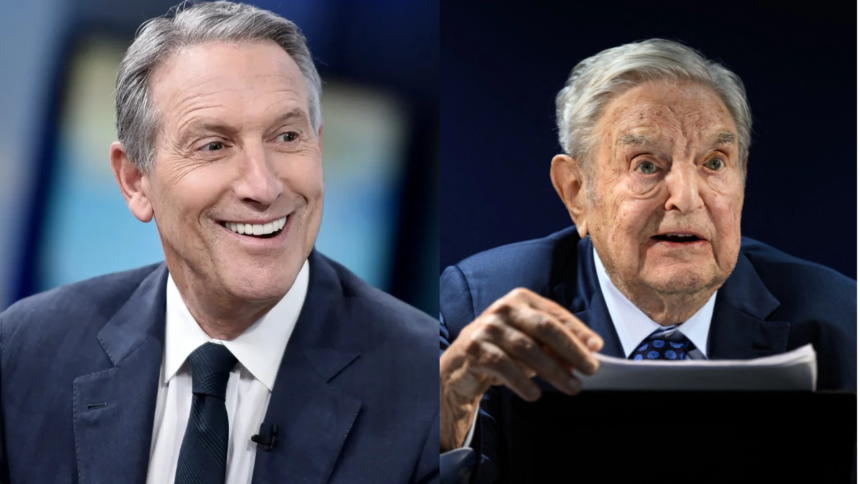
Compare Howard Schultz and George Soros. Learn how Schultz built his wealth, whether he still owns Starbucks, what Soros is known for, and whether Bill Gates helped Schultz.
Introduction: Why Howard Schultz and George Soros Matter
Howard Schultz and George Soros come from very different worlds. One turned a small Seattle coffee roaster into a global brand. The other turned currency trading into a fortune and then into one of the largest private philanthropic networks in the world. Yet people often search for them together, because both are billionaires who stepped into public debate, and both attract admiration and criticism.
This guide covers each man separately, then compares them. It also answers four questions readers ask often:
- How did Howard Schultz get so rich?
- Is Howard Schultz still the owner of Starbucks?
- Did Bill Gates help Howard Schultz?
- What is George Soros most known for?
Understanding both men shows how modern wealth is built, how it relates to power, and why public figures with money are held to a different standard.
Who Are Howard Schultz and George Soros?
Howard Schultz is the businessman most associated with Starbucks. He grew up in public housing in Brooklyn and became the executive who transformed the company from a seller of whole-bean coffee into an international chain of cafés. He is often called Starbucks’ “modern-day founder,” though he did not start the company.
George Soros was born in Budapest in 1930. He is an investor and philanthropist, known as “The Man Who Broke the Bank of England” because of his roughly US$1 billion in profits during the 1992 Black Wednesday currency crisis. He later became better known for his philanthropy and political giving.
The two share a nationality, a billionaire status, and a place in political conversation. They do not share a company, a fund, or a known business partnership. Search results sometimes imply otherwise, so it helps to be clear that they are separate figures with separate careers.
Howard Schultz: From Brooklyn Public Housing to Starbucks
Schultz was born in 1953 and grew up in public housing in Brooklyn, with a strong work ethic instilled by his father, a World War II veteran who worked as a truck driver. He attended Northern Michigan University and began his career in sales at Xerox, then worked for a company that sold coffee equipment.
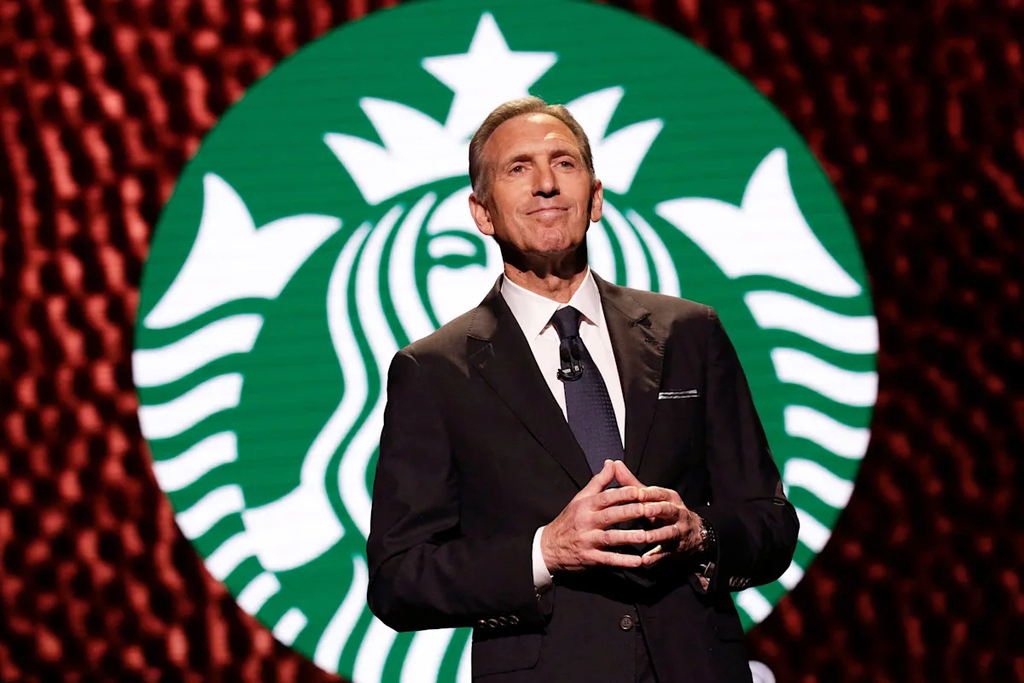
That job led him to Seattle. He joined Starbucks in 1982 as director of retail operations and marketing. A trip to Italy convinced him that espresso bars could become places where people gathered, not just places to buy coffee. The original owners were not interested in that direction, so he left to start his own café business. In 1987 he returned and bought Starbucks from its original owners.
From there, Schultz led the company through rapid expansion, a 1992 public offering, and a long run as CEO. His leadership style stressed atmosphere, employee benefits such as health coverage for part-timers, and a “third place” between home and work.
How Did Howard Schultz Get So Rich?
The short answer is ownership plus timing plus scale. Schultz’s wealth came mainly from equity in Starbucks, not from a salary.
The Main Sources of His Wealth
- Equity in a company that grew enormously. He held shares and stock options as Starbucks went from a handful of stores to tens of thousands of locations. By the time he left the board, the company had more than 36,000 locations worldwide.
- Long tenure. He led the company across three separate stints as CEO, which meant he benefited from decades of growth instead of one short window.
- Stock sales. Over the years he sold large blocks of shares, which turned paper wealth into liquid cash.
- Other investments. He owned the Seattle SuperSonics basketball team and later sold it, and he has made philanthropic and entrepreneurial investments through his family foundation and related ventures.
Published net worth estimates vary widely. Some figures put it around $4 billion, though many sites repeating those numbers are low-quality aggregators, so treat any single figure with caution. Check recent Forbes or Bloomberg figures if you need a precise number.
A Practical Example
Imagine buying a small regional business and reinvesting in brand, training, and real estate for 30 years while the stock rises hundreds of times over. That is roughly the shape of Schultz’s path. The lesson is not that anyone can replicate it, but that long-term equity in a scalable business tends to outperform salary.
Is Howard Schultz Still the Owner of Starbucks?
No. Howard Schultz is not the owner of Starbucks. Starbucks is a publicly traded company on NASDAQ (SBUX), which means thousands of institutional and individual shareholders own it. Schultz never owned it outright after the company went public in 1992.
Here is how his formal role changed over time:
- 1987–2000: CEO
- 2008–2017: Returned as CEO, then handed the role to Kevin Johnson
- 2018: Stepped down as executive chairman and board member, though he remained involved at the company.
- 2022–2023: Returned as interim CEO. Laxman Narasimhan took over as CEO, and Schultz left two weeks earlier than previously announced.
- September 2023: Starbucks announced he was stepping down from the board, with the title of “lifelong Chairman Emeritus.”
That honorary title carries no official board position, voting power, or other rights. Schultz likely still holds some Starbucks stock, but as a minority shareholder, not as a controlling owner. If you see a website calling him the “current owner” or “current CEO,” it is out of date.
Did Bill Gates Help Howard Schultz?
There is no credible evidence that Bill Gates personally helped Howard Schultz build his wealth or Starbucks. The question appears often in search, which suggests readers are mixing up two Seattle-area billionaires, but their paths are separate.
What is documented:
- Both are tied to the Pacific Northwest business world. Gates co-founded Microsoft in the region where Starbucks is headquartered.
- Microsoft’s current CEO sat on Starbucks’ board. Satya Nadella was listed among Starbucks’ directors when Schultz left the board in 2023. That is a corporate governance link, not evidence Gates helped Schultz.
- Gates commented on Schultz’s possible run for president. During a 2019 interview, Gates and Melinda French Gates were asked about Schultz’s possible independent candidacy and said they would not run themselves. That is not an endorsement or a financial favor.
If you read a claim that Gates funded or rescued Schultz, ask for a primary source. A quote, filing, or interview is more reliable than a social media post.
George Soros: Early Life and Investment Philosophy
Soros survived the Nazi occupation of Hungary as a teenager, then studied at the London School of Economics. He worked in finance in London and New York before building his own firm.
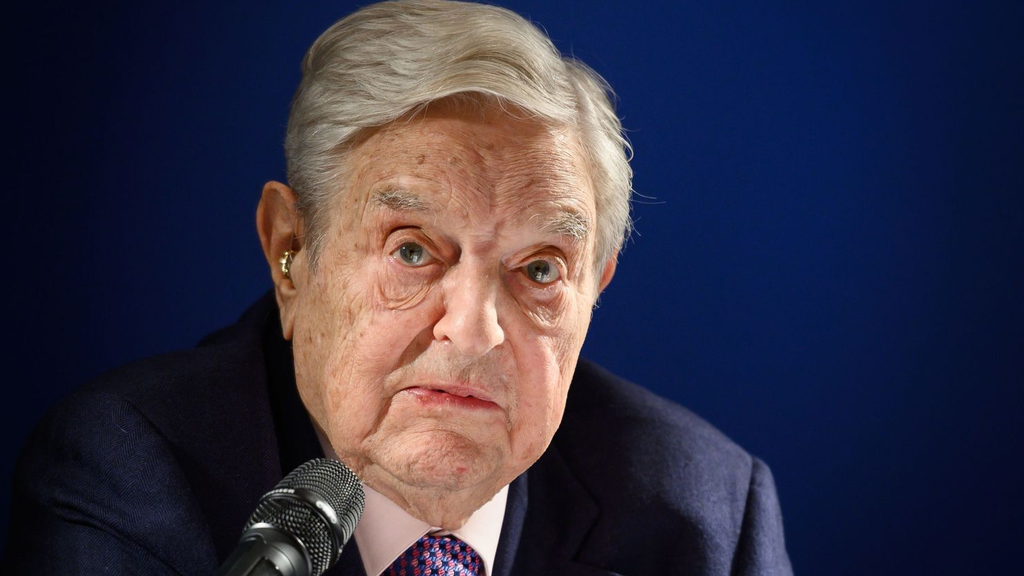
His investing approach is tied to a concept he calls reflexivity. In simple terms, he argued that market participants’ beliefs can change the fundamentals they are trying to measure, so prices and reality influence each other. That view put him at odds with the idea that markets are always efficient.
In 1970, Soros and investor Jim Rogers founded the hedge fund that became Quantum Fund, which reportedly returned 3,365 percent over the following ten years. Dates for the early funds differ slightly across sources, but the pattern is consistent: a small fund that compounded aggressively and later became a major global player.
What Is George Soros Most Known For?
People usually answer this question in three ways, and a complete answer includes all of them.
1. Breaking the Bank of England
In 1992, Soros’s fund bet heavily against the British pound. The profits came from the Bank of England’s failure to raise interest rates to levels comparable to other European countries or to float its currency. That single trade reportedly earned Quantum Fund more than one billion dollars.
2. Philanthropy Through Open Society Foundations
He established the Open Society Foundations in 1979 as a network of foundations promoting justice, education, public health, and independent media. Estimates say he has given more than $32 billion to the foundations over time.
3. Political Giving and Controversy
Soros supports liberal and progressive causes and is among the best-known donors in American politics. He is also a frequent target of criticism. Some critics object to his political influence. Others, including some who engage in outright conspiracy theories, attack him unfairly. Many of those theories rely on antisemitic tropes and have been widely documented as false. Supporters see him as a defender of democratic institutions. Critics argue that private money should not shape public policy. Both views exist, and readers should judge claims against primary sources.
Open Society Foundations and the Next Generation
The Open Society Foundations fund work on human rights, education, public health, and independent media. According to one profile, they operate in over 120 countries. Their reach has also made them a target. Russia banned the foundations from operating in the country in 2015.
Leadership has shifted to the next generation. Soros handed leadership of the foundations to his son Alex in December 2022. Alex Soros told the Wall Street Journal he is “more political” than his father and likely to make political donations advancing voting rights. More recently, George Soros received the Presidential Medal of Freedom from President Biden in January 2025.
Howard Schultz and George Soros Compared
| Feature | Howard Schultz | George Soros |
| Primary source of wealth | Starbucks equity | Hedge fund trading |
| Known for | Building Starbucks into a global brand | 1992 pound trade and Open Society Foundations |
| Political posture | Centrist, explored independent run | Liberal, major Democratic-aligned donor |
| Philanthropy | Schultz Family Foundation | Open Society Foundations |
| Current formal role | Chairman Emeritus (honorary) | Succeeded by son Alex at OSF |
What They Have in Common
- Both are immigrants’ or working-class stories in some sense: Schultz from public housing, Soros from wartime Europe.
- Both turned a financial position into public influence.
- Both have been criticized for how wealthy individuals use that influence.
How They Differ
Schultz built an operating company with employees and storefronts. Soros built an investment firm and a philanthropic network. Schultz’s wealth rose with consumer demand for coffee, while Soros’s rose through market bets. Their political approaches also differ, with Schultz positioning himself as a centrist and Soros giving openly to progressive causes.
Politics, Public Scrutiny, and Billionaire Influence
Both men show what happens when private wealth meets public life.
Schultz announced in early 2019 that he was exploring a 2020 run as an independent. Prominent Democrats pushed back, arguing an independent run could help Donald Trump win re-election. In September 2019, he said he was no longer considering an independent bid. His brief candidacy showed how difficult it is for a billionaire with no party base to gain traction.
Soros’s experience runs the other way. He has operated through donations and foundations for decades, which gives him influence without needing to run for office, but also makes him a lightning rod.
Practical Takeaways
- Check the date on any claim. Roles and net worth change.
- Separate ownership from leadership. A founder or longtime CEO is not necessarily an owner.
- Verify political claims. For both men, check primary documents, filings, and reputable reporting before repeating a claim.
- Notice the gap between wealth sources. Operating-business wealth and investment wealth work differently, and each carries different risks.
Common Misconceptions About Schultz and Soros
- “Schultz founded Starbucks.” He did not. Three Seattle partners started it in 1971, and Schultz joined in 1982 and bought it in 1987.
- “Schultz owns Starbucks.” The company is public, and he has no board seat.
- “Soros and Schultz are business partners.” There is no documented partnership.
- “Bill Gates bankrolled Schultz.” No credible source supports this.
- “Soros is only a political donor.” His fortune came from investing, and his philanthropy extends well beyond U.S. politics.
Conclusion: What to Remember About Howard Schultz and George Soros
Howard Schultz and George Soros are two very different billionaires who often appear in the same searches. Schultz became wealthy by growing Starbucks and holding equity through decades of expansion. He is no longer an owner in any controlling sense, and since 2023 he has held only the honorary title of chairman emeritus. Soros is best known for the 1992 bet against the British pound, his giving through Open Society Foundations, and the political debate that surrounds him.
On the specific questions: Schultz got rich through Starbucks stock and long tenure, he does not own Starbucks outright, and there is no credible evidence that Bill Gates helped him. Soros is most known for his currency trade, his philanthropy, and his role in politics.